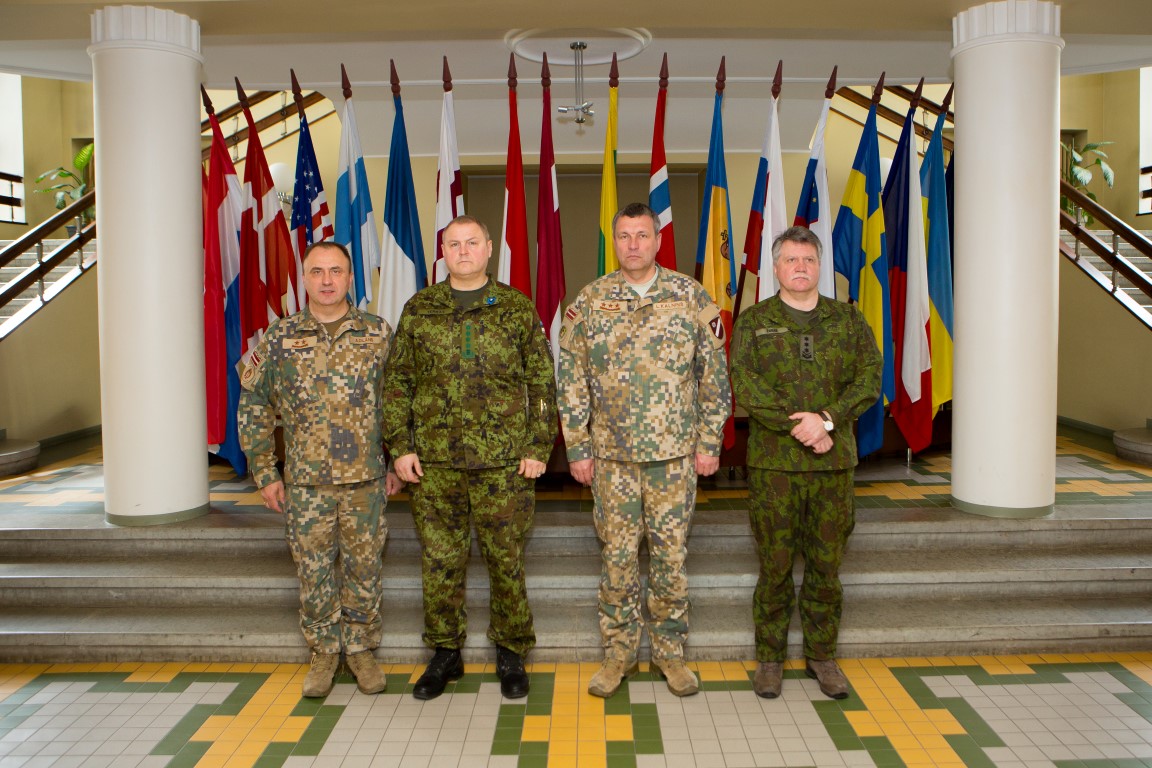
On April 24 Chief of Defence of Lithuania Lieutenant General Jonas Vytautas Žukas conducted the first formal visit to the Baltic Defence College in Tartu, Estonia.
"The visit was a great opportunity to understand the activity and capabilities of the College better, and to share together with Latvian and Estonian Chiefs of Defence insights on the security situation in the region, development of defence capabilities, and readiness for armed defence with students of the Higher Command Studies Course," Lt Gen J. V. Žukas said after the visit.
In the beginning of the visit Chief of Defence met with Commandant of the Baltic Defence College Major General Andis Dilāns, Dean Colonel (retired) Dr Zdzislaw Sliwa, and other representatives of the College. Chief of Defence was briefed on the structure of the College, qualification improvement courses, conditions of studies, international cooperation, and future plans.
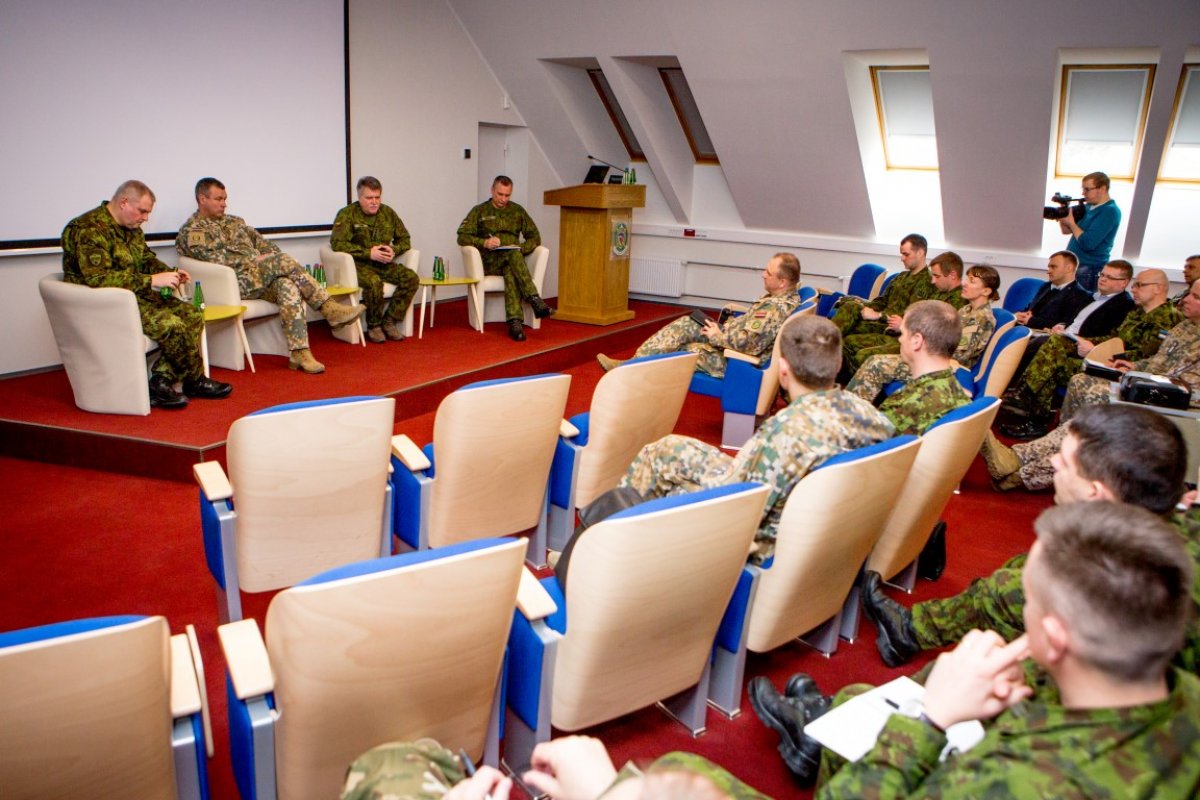
Later Lt Gen J. V. Žukas met with Chief of Defence of Latvia Lt Gen Leonīds Kalniņš and Chief of Defence of Estonia Gen Riho Terras and took part together in a panel discussion on security matters organised by the Baltic Defence College. The discussion was arranged to help students of the Higher Command and Staff Course to better understand the Baltic security situation, priorities and plans of defence capability development, and ongoing structural and qualitative reforms, so that they can use the knowledge in their graduation papers.
NATO-accredited 5-month long Higher Command Studies Course (HCSC) is annually attended by up to 20 strategic level officers and officials from the Baltic, partner nations and allies. The course provides the students with knowledge necessary for strategic decision-making in a complicated international environment and trains creative and active leaders, opinion shapers and managers.
At the end of the visit Baltic Chiefs of Defence and the Baltic Defence College leadership discussed organisation and development prospects of the Senior Leaders' Course. It is a week-long course for generals and civil servants of equivalent rank from the governmental institutions of the Baltic countries, allies and partner nations, in order to help them be better prepared for top national or international positions.
The Baltic Defence College is a project of the three Baltic states for training higher officers. The military institution provides education for officers and civilian officials from the Baltics and other countries in four course programs: for civil servants, joint command and general staff officers, higher command officers, and senior leaders.
Photo credits: Liis Vahe (BDCOL)