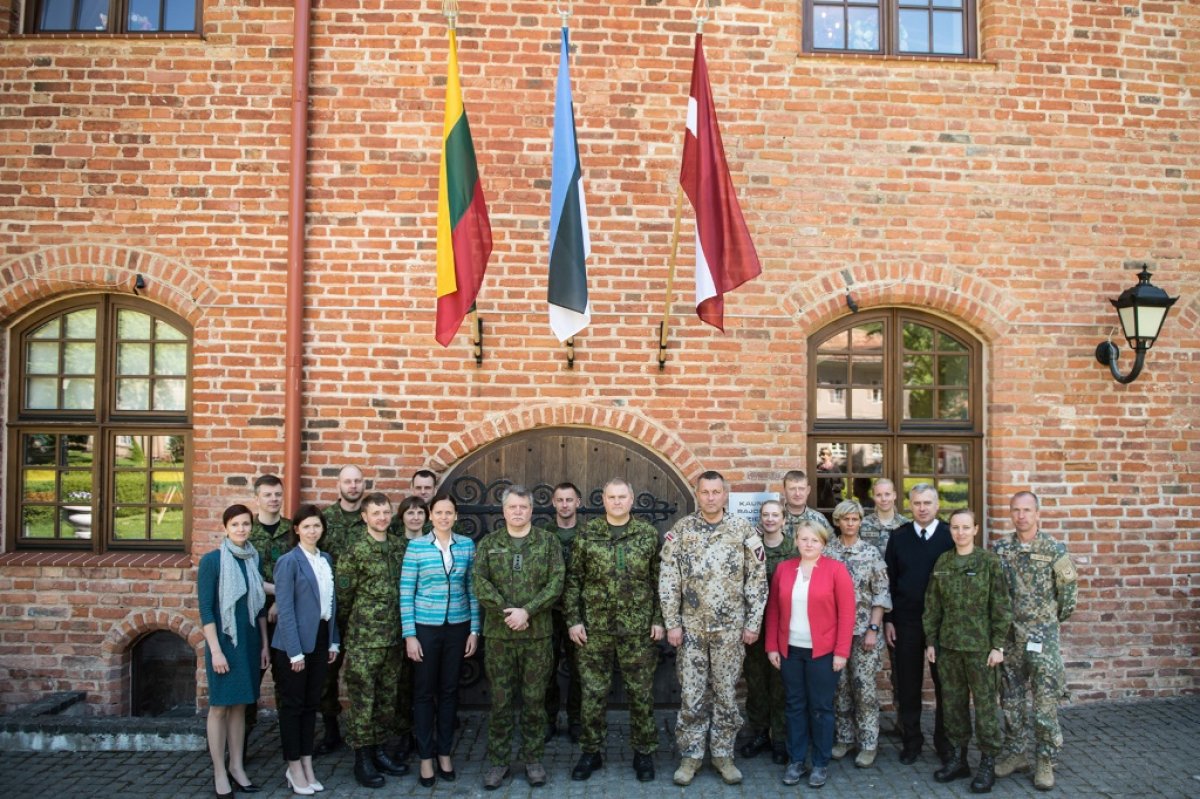
"From military perspective we are a single operational area, therefore we have to seek maximally close collaboration in planning, maintaining, and enhancing our land, sea, and air capabilities," Chief of Defence Lieutenant General Jonas Vytautas Žukas said at the meeting of the Baltic Defence Committee at Raudondvaris Castle Manor in Raudondvaris (Kaunas district) on May 7.
Members of the Baltic Defence Committee - Baltic Chiefs of Defence, with representatives from the Baltic Ministries of Defence and Armed Forces Staffs, gathered in Lithuania to discuss strategic aspects of security and military cooperation in the region.
"I am happy to tell that we succeeded to agree on many questions during the meeting. We have unanimously agreed to further increase interaction among the Baltic armed forces through coordination of defence plans, intelligence sharing, joint participation in military exercises ad standbys, military cooperation projects, in improving personnel qualification, and all in all, strengthening the defensive power of the Baltic region," Lt Gen J. V. Žukas.
According to Chief of Defence, the most important achievement of the meeting was to agree to strengthen maritime surveillance capabilities generating regional maritime picture. Baltic Chiefs of Defence delegated to the Baltic Naval Committee (Commanders of navies) to form a work group for preparing and tabling the concept of the said maritime surveillance capability. Such a regional capability is expected to facilitate planning of naval exercises and operations and improve situational awareness in the Baltic Sea for both, us and our allies.
In the discussion on the Baltic states' navies Chiefs of Defence acknowledged that maintenance of the present capabilities, and development - all the more, will require large investment in the long-run. That is why it would be rational to a have a long-term vision of the Baltic navies which would enable the armed forces to strengthen security in the Baltic Sea at less expense, i.e., save by jointly procuring warships or equipment, and not investing into naval capabilities that another Baltic state already has. This is namely the vision that Chiefs of Defence have assigned to the Baltic Naval Committee to prepare a concept for until the Baltic Military Committee's meeting next year.
On May 7 two work sessions took place at Raudondvaris Castle Manor. The first session addressed results of the Baltic Defence College's activity, prospects of financing and manning. Chiefs of Defence were also briefed on the concepts of the ongoing Exercise Hedgehog 2018 of the Estonian Defence Forces, Exercise Lithuanian Host 2018 - a planned national governmental level host nation support exercise of Lithuania, and the multinational Exercise Baltic Host 2018.
The second session focussed on trilateral cooperation of land, naval, and air forces. Such projects of practical cooperation as BALTNET, BALTRON, BALTBAT, etc., were reviewed.
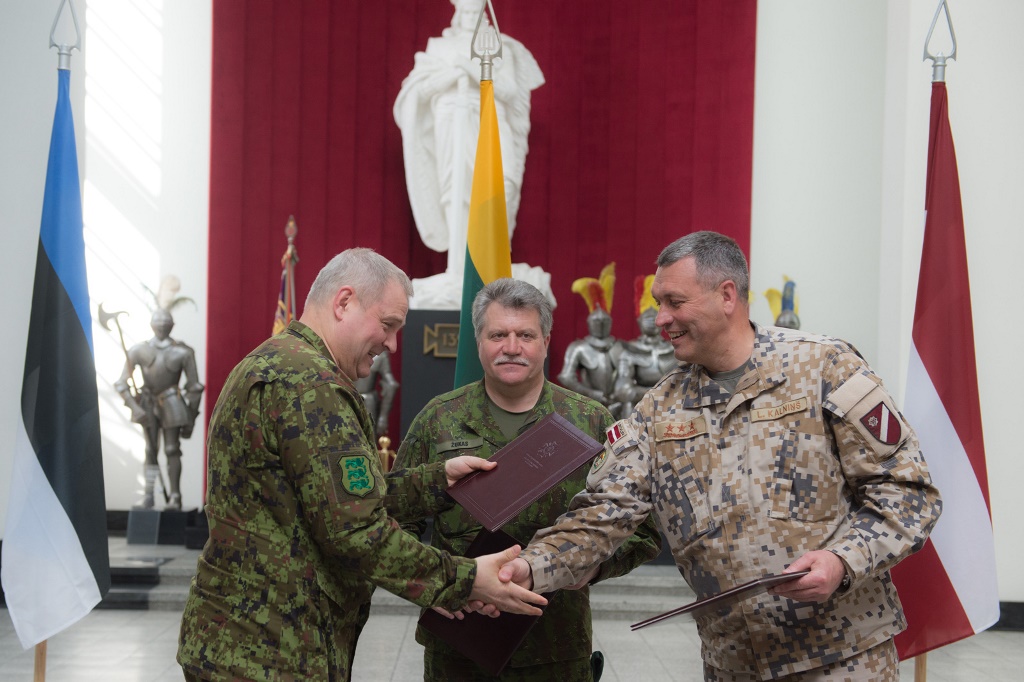
The third session of the meeting took place at Kaunas Garrison Officers Club in Kaunas. During the session Chiefs of Defence of Lithuania, Estonia, and Latvia, respectively, Lieutenant General J. V. Žukas, General Riho Terras, and Lieutenant General Leonīds Kalniņš, discussed the Baltic Combined Joint Staff Element (B-CJSE) established in 2015 for coordinating planning of the states' armed defence, activity results, and future plans, and cooperation between the countries' special forces.
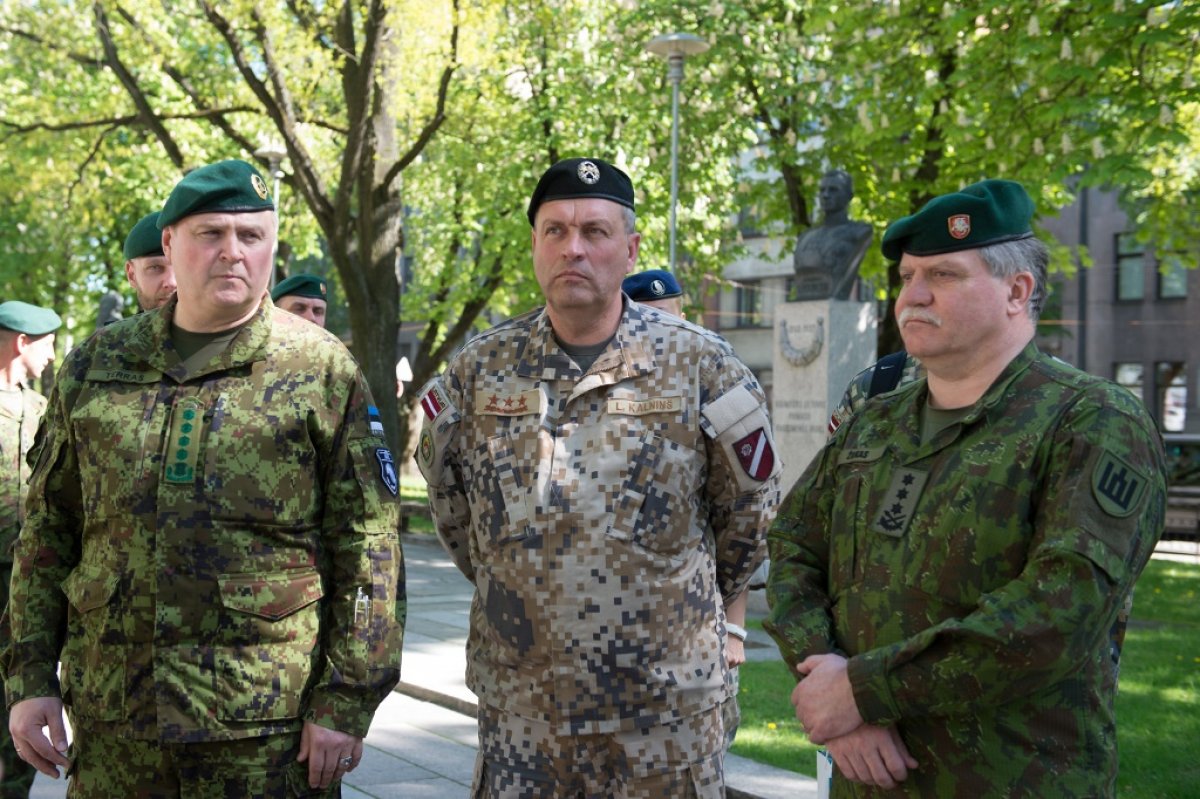
On the margins of the meeting Chiefs of Defence of Lithuania, Estonia, and Latvia visited Vytautas the Great War Museum and laid flower tributes to the fallen for the freedom of Lithuania at the Tomb for the Unknown Soldier Memorial in the Museum's yard.
The Baltic Military Committee is held once in a year in one of the Baltic states rotationally.
Photo credits: Alfredas Pliadis (MoD)
Spokesperson for the Chief of Defence Major Mindaugas Neimontas
+370 5 278 5091, +370 682 25359, mindaugas.neimontas@mil.lt