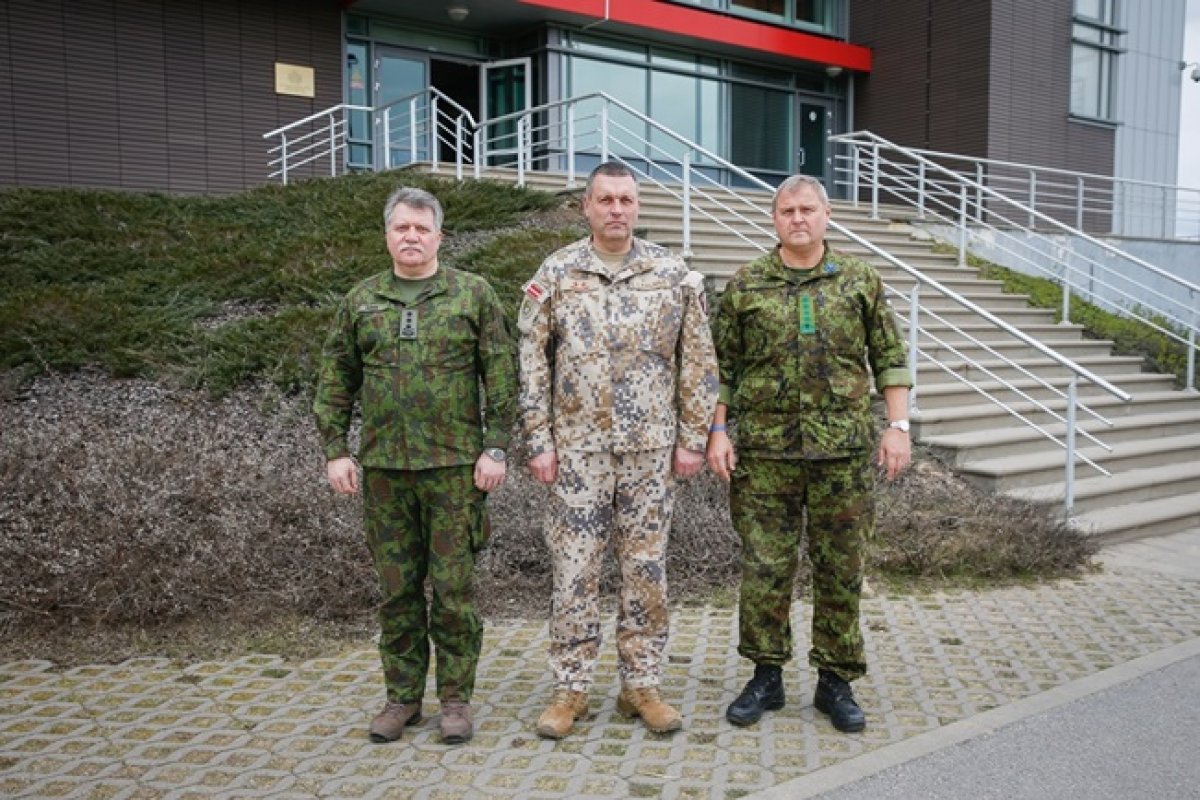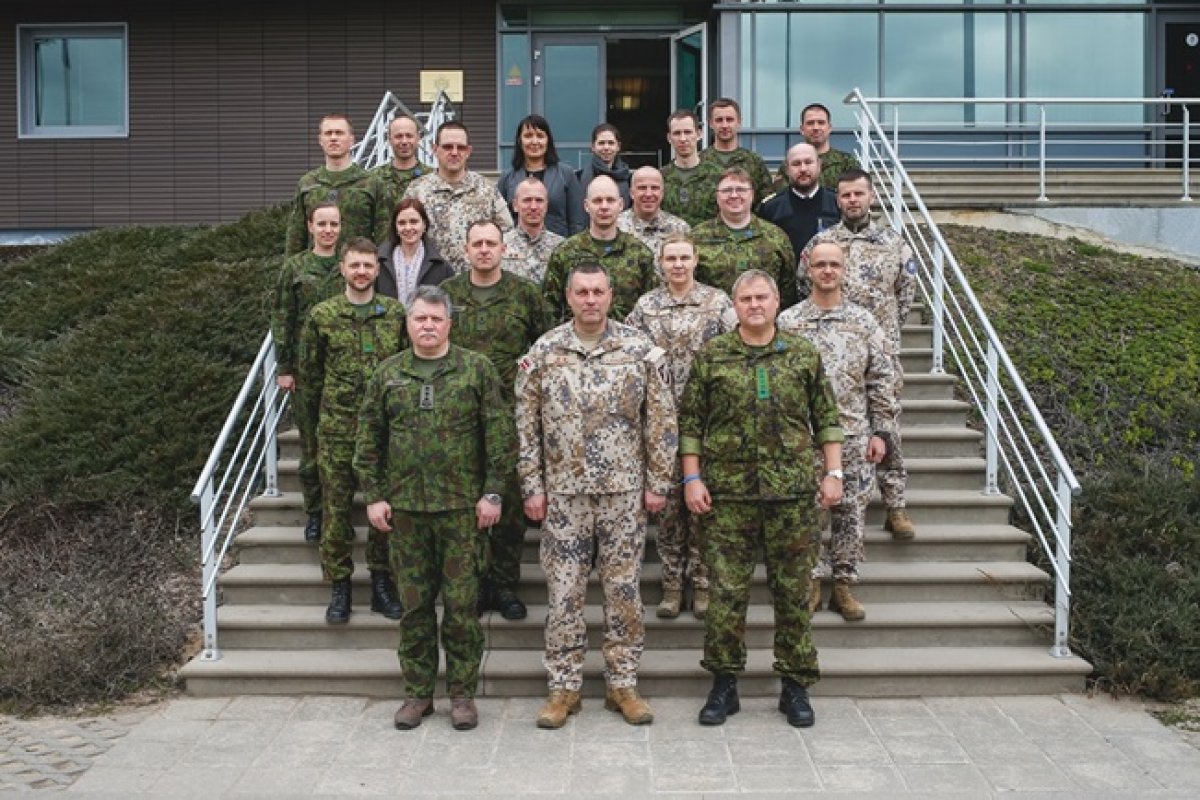
On April 18-19 Chief of Defence of Lithuania Lieutenant General Jonas Vytautas Žukas attended a meeting of the Chiefs of Defence of the Baltic states at the Latvian Air Force Base in Lielvarde. The Baltic CHODs addressed topical security and defence cooperation aspects in the Baltic region.
Lt Gen J. V. Žukas, Chief of Defence of Estonia General Riho Terras and Chief of Defence of Latvia Major General Leonīds Kalniņš discussed the current security situation in the region, the progress of deployment of the NATO enhanced Forward Presence in the region, and the cooperation of Estonia, Latvia and Lithuania in developing trilateral defence projects.
This year's meeting focussed on the deployment of the NATO enhanced Forward Presence (eFP) Battlegroups, enhancement of military capabilities of the Baltic states. Estonian, Latvian and Lithuanian CHODs agreed that deployment of the NATO enhanced Forward Presence in the Baltics is a big step ahead not only in deterrence but also in ensuring efficient defence.
"It is very important that the Baltic states have a unified understanding of the security threats and work together to be able to counter them. A close and streamlined cooperation of Lithuania, Latvia and Estonia are vital for ensuring security and effective defence of the region and each of three countries separately," Lithuanian Chief of Defence Lieutenant General J. V. Žukas said after returning from the meeting.
The decision to deploy NATO enhanced Forward Presence Battalion Battlegroups in Poland and there Baltic states was taken at the NATO Summit in Warsaw in the summer of 2016. The first eFP Battlegroup was deployed late in January in Lithuania. The nearly 1000-strong unit is led by Germany. Dutch and Belgian troops currently comprising the battlegroup will be joined by Norwegians in May, and by Luxembourg's soldiers later. The eFP Battlegroup in Estonia is led by the United Kingdom, in Poland - by the United States, and Canada will head the eFP Battlegroup deploying into Latvia as of June.
Baltic CHODs also discussed the course of the BALTRON, Baltic Naval Squadron, project in 2017, looked into the information on the development of further development of the Baltic Air Surveillance Network and Control System (BALTNET) project, human resources, and approved BALTNET budget for 2018.
The three Baltic CHODs also agreed to continue the preparations for assigning the Baltic Battalion for standby for the NATO Response Force in 2020 putting Latvia in charge of it.
Commandant of the Baltic Defence College (BALTDEFCOL) Major General Andis Dilāns provided an overview of BALTDEFCOL activities, progress of the implementation of the BALTDEFCOL development plan 2017-2025, and the annual action plan for 2018. The participants of the meetings also shared views on the experience drawn from Exercise Thunder Strike 2016 and lessons learned.
The meeting also addressed trilateral cooperation, support for contributing the Baltic states' military units to NATO and European forces and multinational deployments was expressed.
The Baltic CHODs meet annually on a rotational basis since 2016 with the next meeting to be held in Lithuania in 2018.