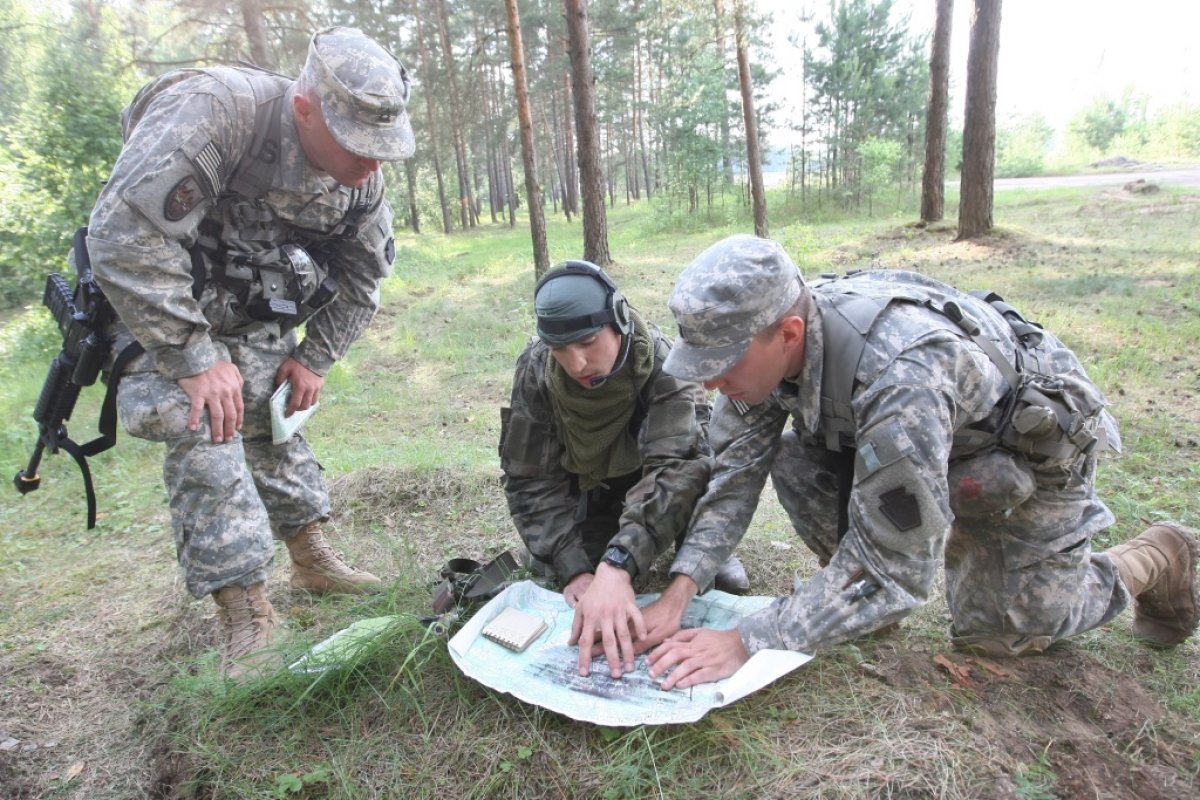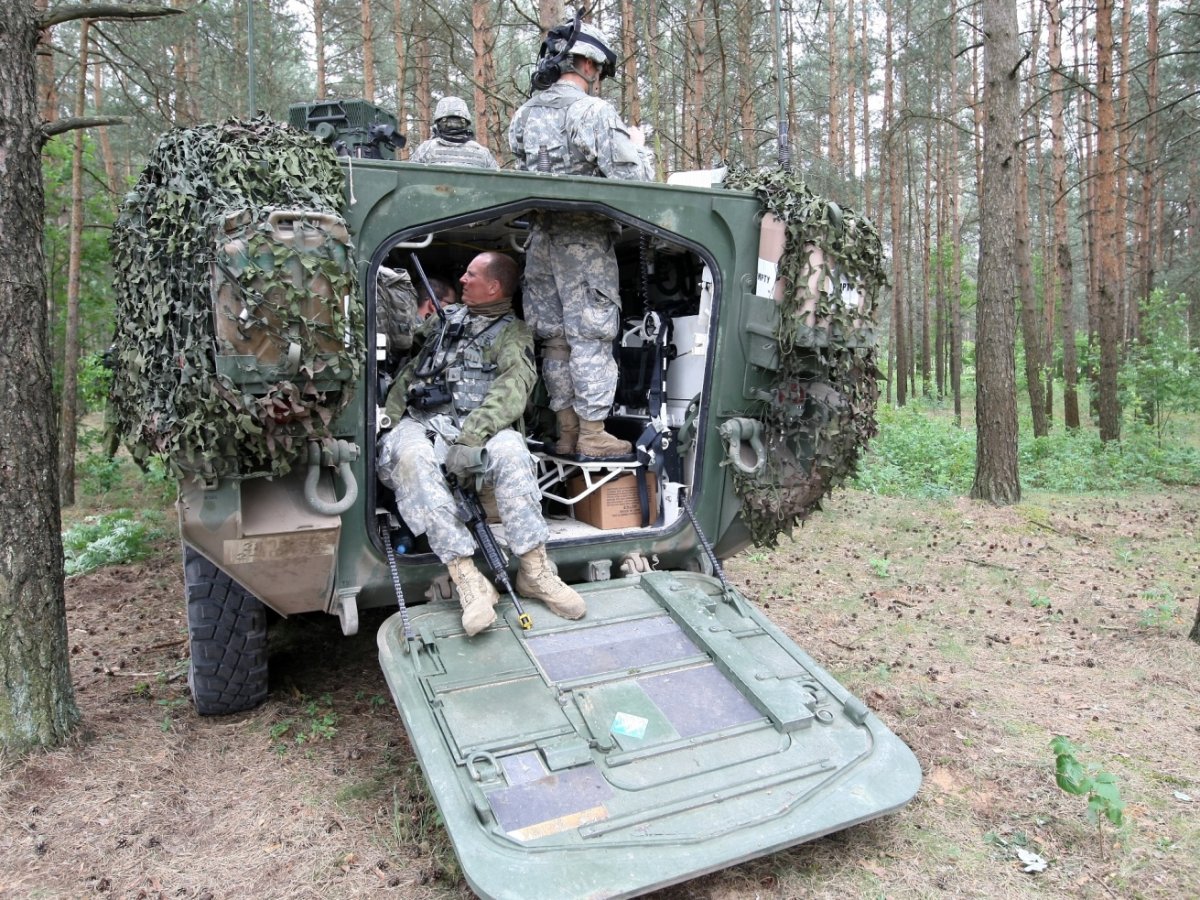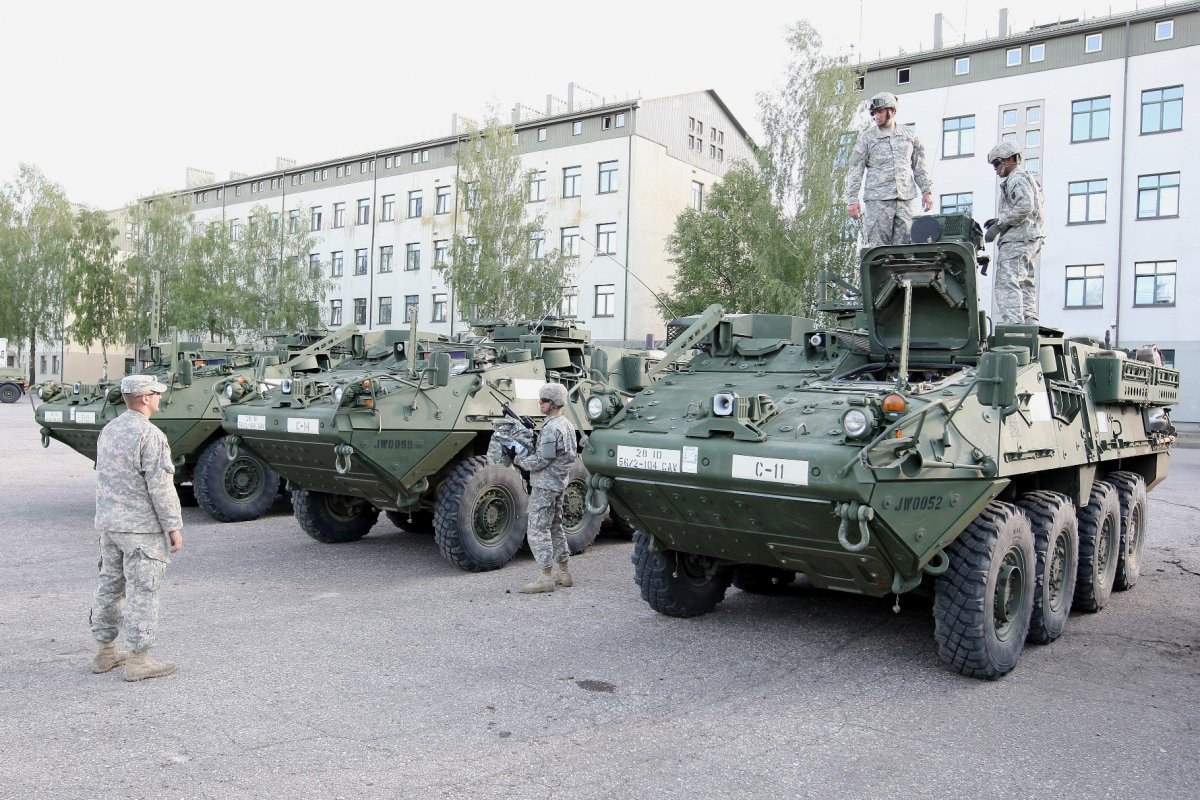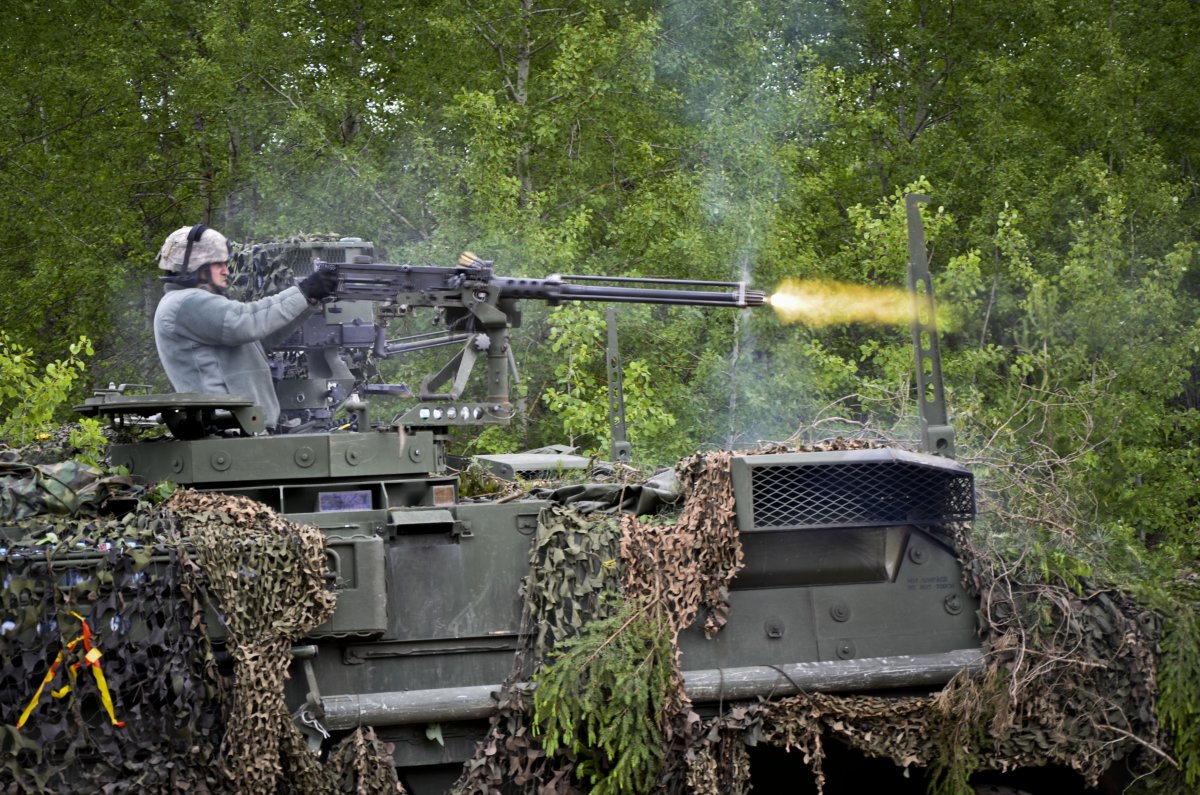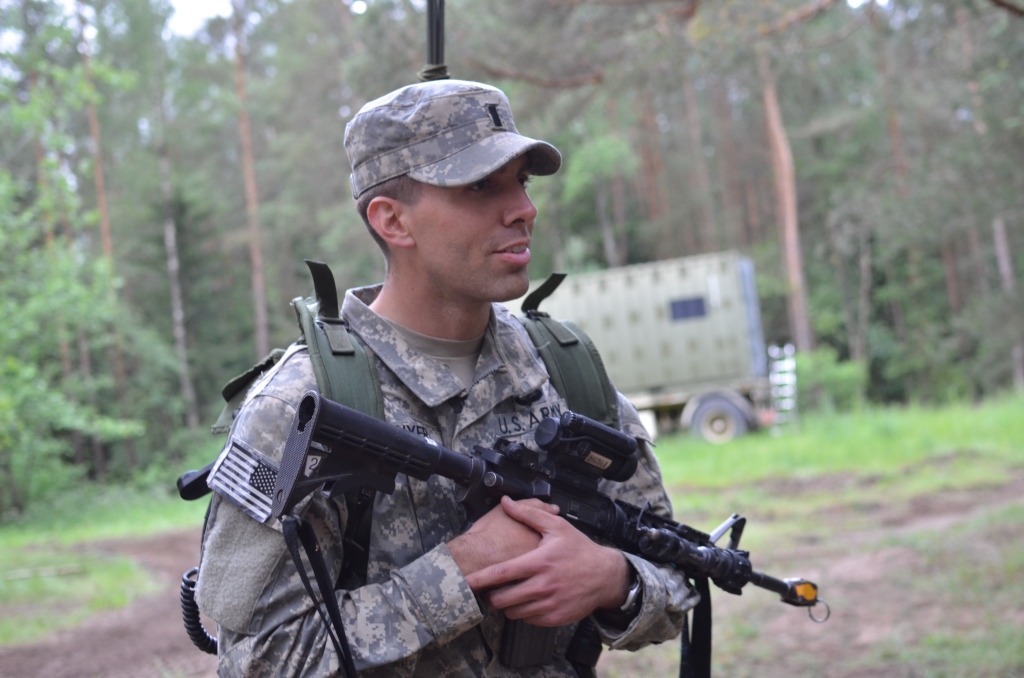
The Public Information Centre of Exercise Saber Strike 2014 in Lithuania is sharing an interview with 1st Lieutenant Mark Dwyer, the commander of the STRYKER platoon of the 56th Cavalry Brigade, 28th Infantry Division, U.S. Pennsylvania National Guard, for over three years. The U.S. officer spoke about the experience of his colleagues, uniqueness of the Strykers, and cooperation with Lithuanian military.
The U.S. Pennsylvania National Guard has four of the STRYKER armoured combat vehicles and their crews, the total of approximately 30 servicemembers, at Exercise Saber Strike 2014 at the Gaižiūnų Training Range. Some of them are veterans seasoned in actual operations that can boast combat experience.
"Experienced leaders are a huge support, as their qualification makes them able to inform younger soldiers on how to conduct operations on the sophisticated equipment in Strykers, and ensure the crew's personal discipline," commander of the STRYKER platoon 1LT Mark Dwyer says.
According to Dwyer, the STRYKER vehicles have been obviously designed to protect its crew and serve their purposes on the battlefield, the vehicle has answered its purpose in such operations as in Iraq and Afghanistan.
Dwyer said that the STRYKERS are particularly reliable vehicles and self-recovery is possible if there is a sufficiently knowledgeable crew-member. It is easy to maintain, there are enough spare parts in unit headquarters and in the mission areas. The vehicles undergo full recovery at specialized services back in the United States, however.
"There are pros and cons of the vehicle, certain weaknesses as well, for example, electrical issues, like in any modern car. The STRYKER is essentially an excellent, robust and reliable combat vehicle. The Pentagon appreciates the lessons the U.S. has leant in multinational operations and exercises and is upgrading the STRYKER gradually." 1LT M. Dwyer also added that there were other variants of the STRYKER - medical, engineer, reconnaissance, and other. The U.S. troops are using reconnaissance vehicles in Lithuania.
"I'm just glad that I have the opportunity to work here, at the multinational Exercise Saber Strike 2014. I have not been deployed to multinational operations abroad yet, so it's important to know people, where their boundaries lie, what their cultures are about," 1LT Mark Dwyer expressed his impression.
"With just several days of the exercise at the training range through, I have been convinced that the Lithuanians would not let us down, they always can give guidance to the STRYKER platoon conducting reconnaissance, and explain additionally if necessary. I did not expect that the cooperation with Lithuanians and the completion of our tasks will be so fluent before arriving in Lithuania. What I mean is that we are using the same language as soldiers, we are using the same tactics. Our reconnaissance combat vehicles allow us not only following enemy's actions but also destroying an enemy aiming at a Lithuanian battalion. Our colleagues from Poland are highly qualified scouts operating four-wheelers and ATVs, they are quick and mobile, they have good reconnaissance information about the terrain and are able to call in indirect fire support if the enemy has been spotted," the officer shared his impressions from the exercise.
The intense training has helped develop real military friendships, we have got to know what they are, what their lifestyle is, what they stand for and their moral background. Their moral is really high just like the value they attach to their motherland. We have discovered that it is important to look beyond the different green and grey uniforms and see people guided by similar values. It's a pleasure working with other obviously similar military backgrounds. I hope this cooperation and this training continues to happen in the future," 1LT M. Dwyer summarized.
Interviewer: PV2 V. Džiavečka
Photo credits: Captain P. Babilas(1), Private V. Džiavečka(2,4) and Master Sergeant L. Ambroževičiūtė(3,5)