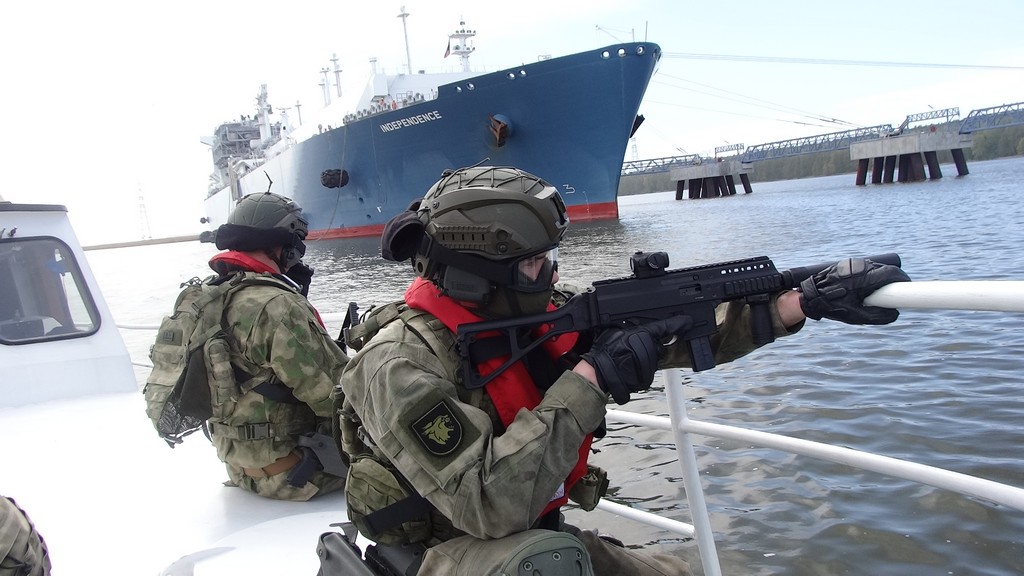
On May 21 the largest national exercise Lithuania held this year, Lightning Strike 15, was declared closed. The first of the kind, the exercise tested various of types of situations - a speedy mobilisation of the Lithuanian reserve, actions in case of a hybrid warfare and terrorist attacks, and tactical training.
The first phase of the exercise tested the mobilisation system of the Lithuanian Armed Forces and the number of the ready reserve troops included into exercise training audience lists who would respond to the call to arrive at mobilisations centres on a designated time.
During one day of mobilisation, roughly 50% of the called up troops (out of 1 thousand call-up notices sent in Klaipėda, Marijampolė, Panevėžys and Šiauliai districts according to the list of draftees who had declared their place of residence) turned out at the mobilization centers. Roughly 15% of the draftees contacted the mobilization centers in advance and informed about excusable reasons for not reporting on the appointed day. Barely 1% of the called-up persons appeared to be not eligible for military service.
The second (main) phase of the exercise took place in Klaipėda, Kaišiadorys, and Švenčionėliai, and the Gaižiūnų and Pabradės Training Areas. The Response Force of the Lithuanian Armed Forces was cooperating with over 500 officers of the security system of the interior - the Lithuanian Police, the Anti-terrorist Operations Unit ARAS, the Public Security Service, and the Fire and Rescue Department. Military personnel and officers of the mentioned authorities trained eliminating jointly threats to the state in case of alleged hybrid warfare, and combating emerging threats.
During the final phase, live infantry fire exercise, Lithuanian soldiers and officers of the Public Security Service and the State Border Guard Service honed their skills of firing infantry arms.
The three phases of the exercise that had been running from April 23 gave the first-ever real-life test of the mobilisation system of the Lithuanian Armed Forces. The field training exercise certified the first National Response Force, while the latter two weeks involved the majority of elements of the Lithuanian Armed Forces in a live fire exercise.
"The exercise went well, we have identified a considerable number of lessons to learn till the exercise next year. Exercise Lightning Bolt was a unique opportunity to involve really many units from different state authorities in practice. I am particularly delighted with the patriotic response of our citizens, both during the mobilisation test, and in the urban warfare exercise. Local residents were really positive, interested to observe, to communicate and to learn more about the exercise," Officer Conducting the Exercise, Chief of the Joint Staff Brigadier General Vilmantas Tamošaitis said.
Exercise Lightning Strike 15 simulated various types of the most relevant current threats, from hybrid warfare to terrorist attacks. The exercise scenario involved such strategic infrastructure objects as an LNG terminal, Klaipėda Seaport, Palanga Airport, etc.
Exercise Lightning Strike 15 was organised by the Joint Staff of the Lithuanian Armed Forces. The training event involved over 3 thousand troops from all the services and commands of the Lithuanian Armed Forces and roughly 500 officers of the interior security system. The decision-making process also involved the President of the Republic of Lithuania, HE Dalia Grybauskaitė: the decree was issued on her behalf authorising deployment of the national Response Force for the exercise.
Photo credits: A. Pliadis, Capt D. Suchockis and V. Eiva


