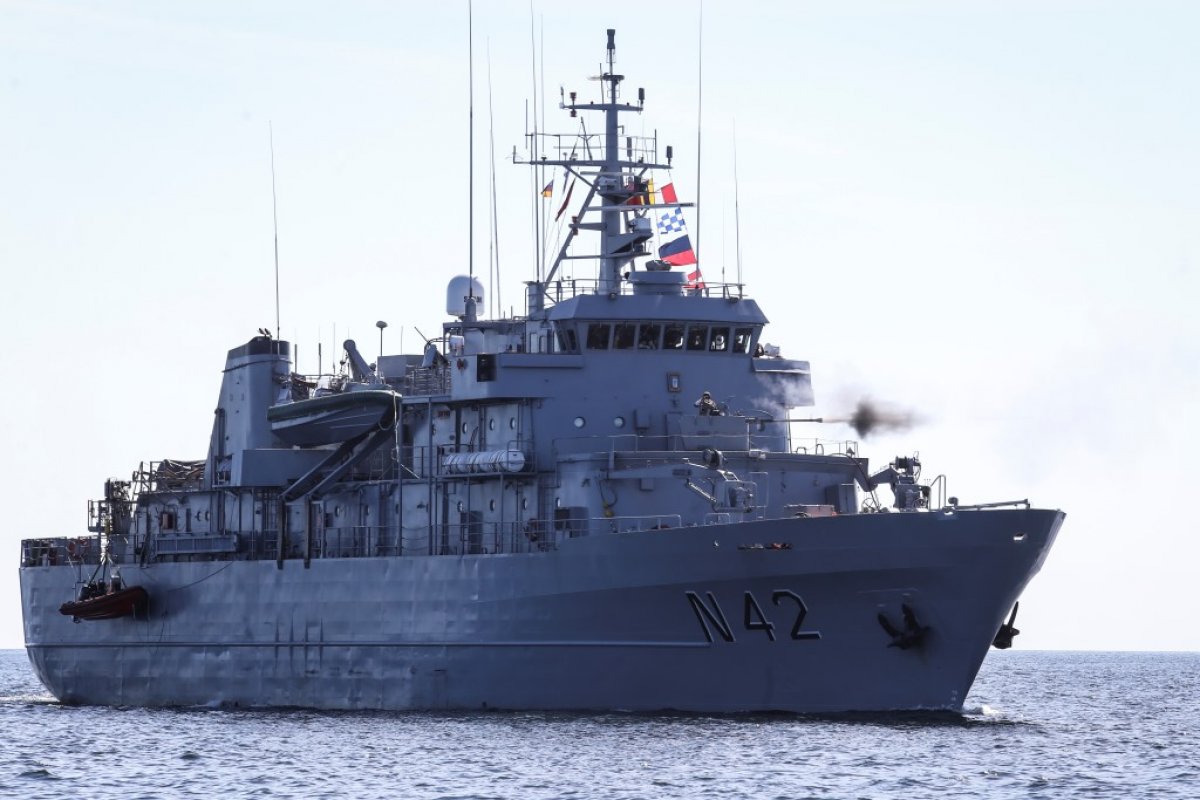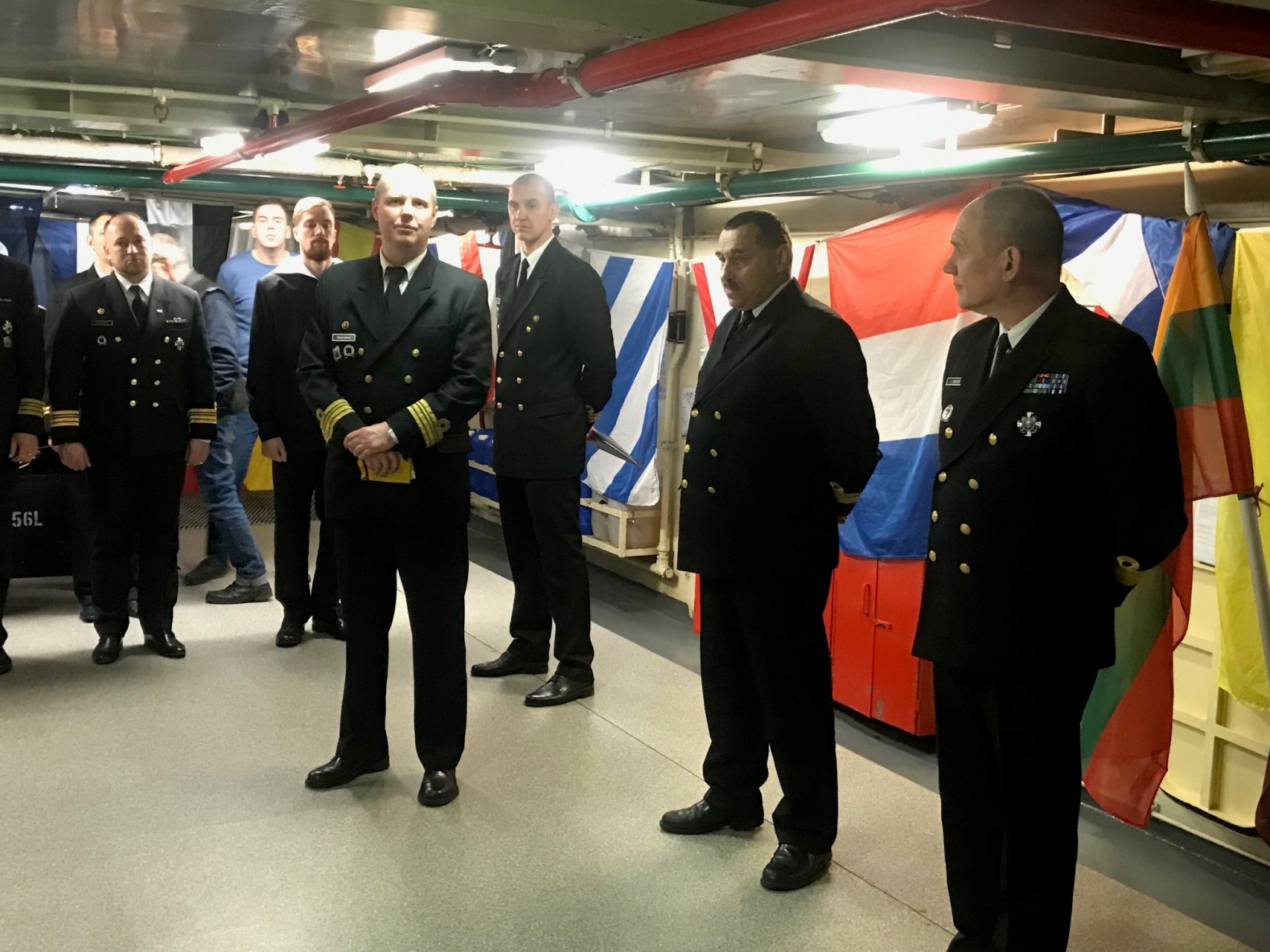
On January 8 commanders and staffs of the Baltic Naval Squadron (BALTRON) changed over at a ceremony in Liepaja, Latvia. Lt Cdr Audrius Venckūnas of the Lithuanian Navy relinquished as BALTRON Commander to Lt Cdr Armands Grebezs of the Latvian Navy after having conducted the duties since 5 January 2018. Lt Cdr Rimantas Preimantas (Lithuanian Navy) was assigned as Chief of Staff of BALTRON.
LNS Jotvingis (N42) command and supply ship of the Lithuanian Navy with Lt Cdr Jevgenijus Vidiajevas in charge was assigned to BALTRON as its command ship as of February 2018 and replaced LNS Kuršis (M54) mine countermeasures ship of the Lithuanian Navy assigned to BALTRON in 2017. The Baltic Naval Squadron (BALTRON) was established on 28 August 1998 as a standing response maritime force of the Baltic states to contribute to the Baltic regional security by neutralising the threat of naval mines in the territorial waters and exclusive economic zones of Lithuania, Latvia and Estonia, to build on mutual understanding and ability to operate in concert in cooperation with military units of NATO countries. The 20th anniversary of BALTRON was celebrated in Riga, Latvia, on August 17, 2018.
Currently BALTRON activities are carried out by Latvia and Lithuania, Estonia withdrew from BALTRON in 2015 but keeps contributing to separate cooperation events and exercises. The experience gained in BALTRON helps in preparing ships for standby with the NATO Response Force or assignments with the Standing NATO Maritime Groups. BALTRON is made up of mine countermeasures vessels, a command vessel, and an international staff. It is made up on a 6-12 months rotational basis by ships and personnel assigned by Latvia and Lithuania. The unit is led by a Lithuanian or a Latvian officer authorised by the committee of Chiefs of Defence of Lithuania, Latvia, and Estonia.
There are more international projects established by the Baltic states for developing cooperation. Apart from BALTRON with its international staff, constantly trained according to NATO standards in order to ensure personnel's readiness for participation in high-readiness SNMCMGs, and contribution to the concept of collective defence, other initiatives that followed BALTRON should be mentioned:
1. Communications Specialists Training Centre was established in 1998 in Tallinn, Estonia, with assistance of the Royal Danish Navy.
2. Navy Divers Training Centre was established in Liepaja, Latvia, in 2001 with assistance from the Royal Norwegian Navy where divers currently can attend up to seven courses of different specialization levels.
3. Mine Countermeasures Equipment Maintenance Centre was established in Liepaja, Latvia, with assistance from the German Navy in 2001. The Centre has an intense routine of maintaining and repairing MCM equipment.
4. Baltic Naval Gunnery and Deck Equipment Maintenance Centre was established in Klaipėda, Lithuania, in 2002 with assistance from the German Navy. It carries out major repairs, transposing and maintenance tasks.
5. Baltic States Naval Junior Staff Officer Course has been delivered in Riga since early 2007. The graduating stage of the course is a bilateral at-sea training organised by Lithuania and Latvia on a rotational basis carried out with BALTRON ships and its international staff providing consultations and assessment of the course attendees in practical work of an international navy staff.
Photo credits: OR-9 Michailas Karpuzovas