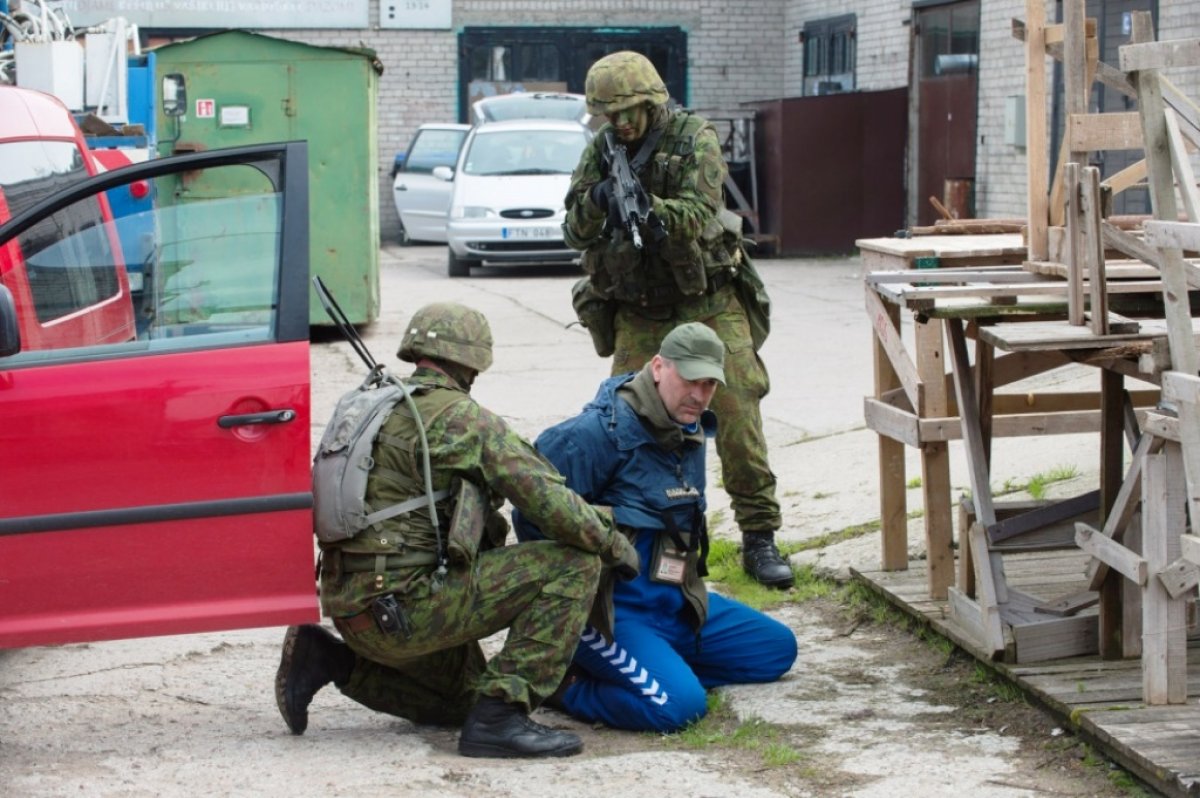
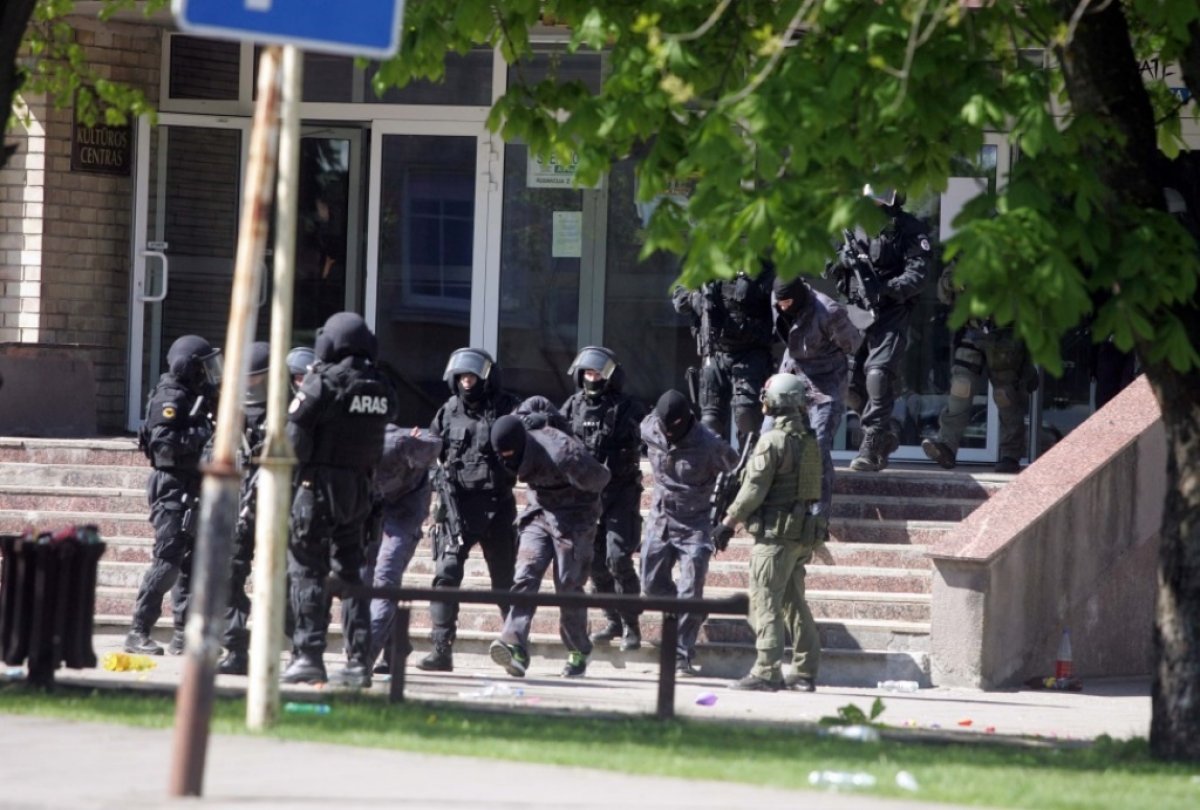
On March 8 Lightning Strike 2016, major national exercise of the Lithuanian Armed Forces, begins in Klaipėda. The goal of the exercise is to train the Lithuanian Armed Forces to complete operations in cooperation with authorities under the Ministry of the Interior and to hone interaction with civil state institutions according to a hybrid warfare scenario. In total, the exercise involves roughly 3 thousand soldiers, approx. 500 paramilitary officers and roughly 200 civil servants. Also, it trains 3 thousand reserve soldiers.
The main action will take place in Klaipėda: for several days armed soldiers of the Lithuanian Armed Forces will patrol the streets, military vehicles, helicopters of the Lithuanian Air Force, pyrotechnics and blank ammunition will be used.
"Modern day armed conflicts are frequently located in densely populated areas where civil residents are the first to fall victims. Armed forces must train in real-life environment, i.e. cities and settlements, as it prepares to manage such conflicts. It is equally important for the Armed Forces to provide a chance for local residents to see, sense and understand the resolve and efforts of Lithuanian soldiers to protect our country," OCE Lightning Strike 2016 Chief of the Joint Staff of the Lithuanian Armed Forces Brigadier General Vilmantas Tamošaitis said.
Exercise Lightning Strike 2016 trains units of the Lithuanian Rapid Response Force and the Domestic Support Forces to provide a combined response with subunits of the Ministry of the Interior and other state institutions to local armed incidents and trespassing of state border that do not amount to an act of aggression.
Officers of the Police Department, Public Security Service and Anti-terrorist Operations Unit Aras, and representatives of the State Border Guard Service, and Fire and Rescue Service train alongside Lithuanian military personnel. The exercise also involves representatives from municipalities, medical personnel from city hospitals, and representatives of the Lithuanian Riflemen Union.
The second iteration of Exercise Lightning Strike is held to practice, test and assess the speed and efficiency with which the Ministry of the Interior would invoke the Domestic Support Forces and the National Rapid Response Force to neutralise armed sabotage groups while at the same time providing maximum protection for local residents and their property.
Exercise Lightning Strike 2016 will run from March 8-16, while the most intense training in Klaipėda will take place from March 12 to 13, including the night.
The final phase of Exercise Lightning Strike on March 15-16 will train partial mobilisation of the trained reserve in Alytus, Kaunas Utena, and Vilnius. Draftees will be called up to report to four mobilisation centres in the four cities as the National Rapid Response Force is to be supplemented with the trained reserve personnel in case of necessity.
Call-up notices were sent to 3 thousand draftees who had undergone the Mandatory Initial Military Service of the Lithuanian Armed Forces. The soldiers of the trained reserve who are called up for Exercise Lightning Strike and are found to be in good health are planned to be invited to take part in reserve training events at Division General Stasys Raštikis Lithuanian Armed Forces School, Duke Vaidotas Mechanised Infantry Battalion and General Romualdas Giedraitis Artillery Battalion in autumn.
Scenario of Exercise Lightning Strike 2016
The exercise scenario covers a range of simulated threats, from hybrid warfare to acts of terrorism. Particular attention is given to protection of strategic infrastructure, such as the LNG terminal, Klaipėda Seaport, etc.
According to the exercise scenario, unidentified armed groups provoke riot and unrest and attempt to seize local administration headquarters in Klaipėda. Subunits of the Ministry of the Interior fall short of capabilities and turn to the Rapid Response Force of the Lithuanian Armed Forces: military territories are established where servicemembers are authorised to use military force.
The National Rapid Response Force of the Lithuanian Armed Forces is planned to be used to stabilise the situation and respond to incidents. A range of incidents is going to be simulated to practice ensuring security of residents of the city of Klaipėda.
About National Response Force and Domestic Support Forces
During peacetime the Lithuanian Armed Forces implements its mission through support to civil institutions in cases of emergency. The task is completed by the Domestic Support Forces trained and used for this purpose. In 2016 the Domestic Support Forces include nearly 1000 soldiers from the Lithuanian Land Force, Navy, Air and Special Operations Forces. The major part of the Domestic Support Forces, roughly 700 personnel, is made up by soldiers of the Lithuanian Grand Duke Butigeidis Dragoon Battalion. It is supported by troops assigned to Juozas Vitkus Engineer and King Mindaugas Hussar Battalions and the National Defence Volunteer Force.
The Domestic Support Forces were formed in 2009 and entered standby in 2010. The National Rapid Response force is on standby since 1 November 2014. Currently it includes two battalion battle groups formed by the Lithuanian Grand Duke Algirdas Mechanised Infantry Battalion and the Grand Duchess Birutė Uhlan Battalion. The battle groups are reinforced by elements of the Lithuanian Air Force, the Special Operations Forces, and logistic support. Upon receiving an order the force is ready to act within 2 hours.
POC: Public information officer for Exercise Lightning Strike 2016 Captain Tomas Pakalniškis, phone no.: 00370 657 61271 email tomas.pakalniš[email protected]
Credits: A. Pliadis and G. Maksimovicz (Lightning Strike 2015)