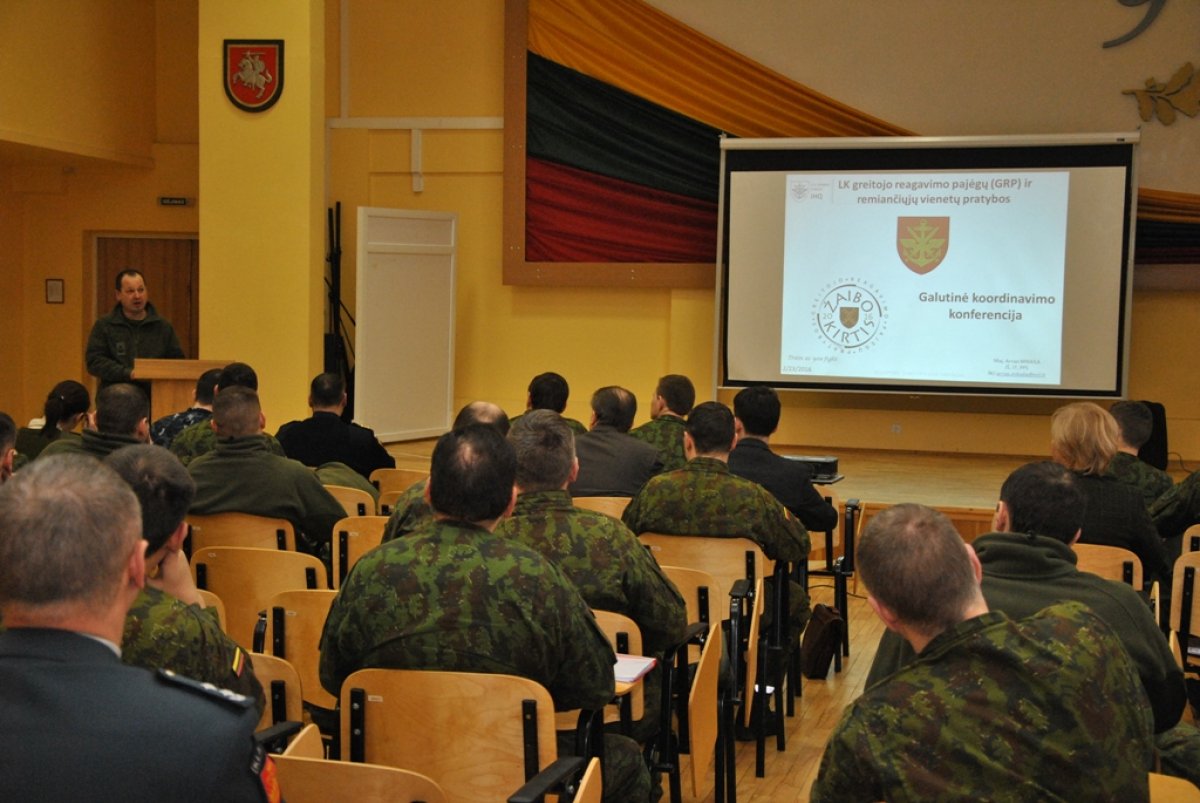
On February 23 General Adolfas Ramanauskas Warfare Training Centre hosted the Final Planning Conference of the national exercise Lightening Strike 2016. At the conference exercise planners and coordinators representing the Lithuanian Armed forces, subunits of the Ministry of the Interior, and civil authorities concluded a period of consistent preparations and planning that had taken three months.
According to one of the participants of the conference, Chief of the Joint Staff of the Lithuanian Armed Forces Brigadier General Vilmantas Tamošaitis, the exercise which is due to run on March 7-16 will be one of the key national exercises in Lithuania this year.
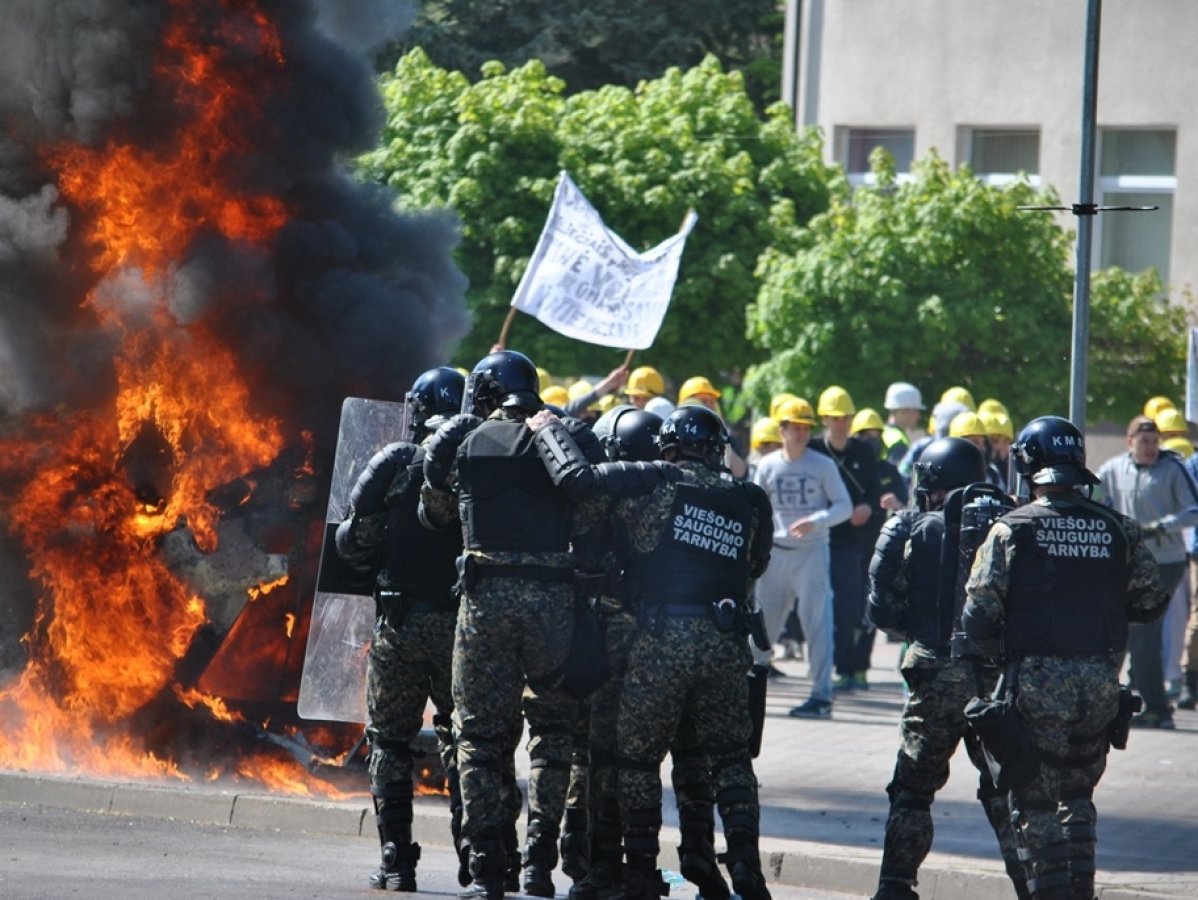
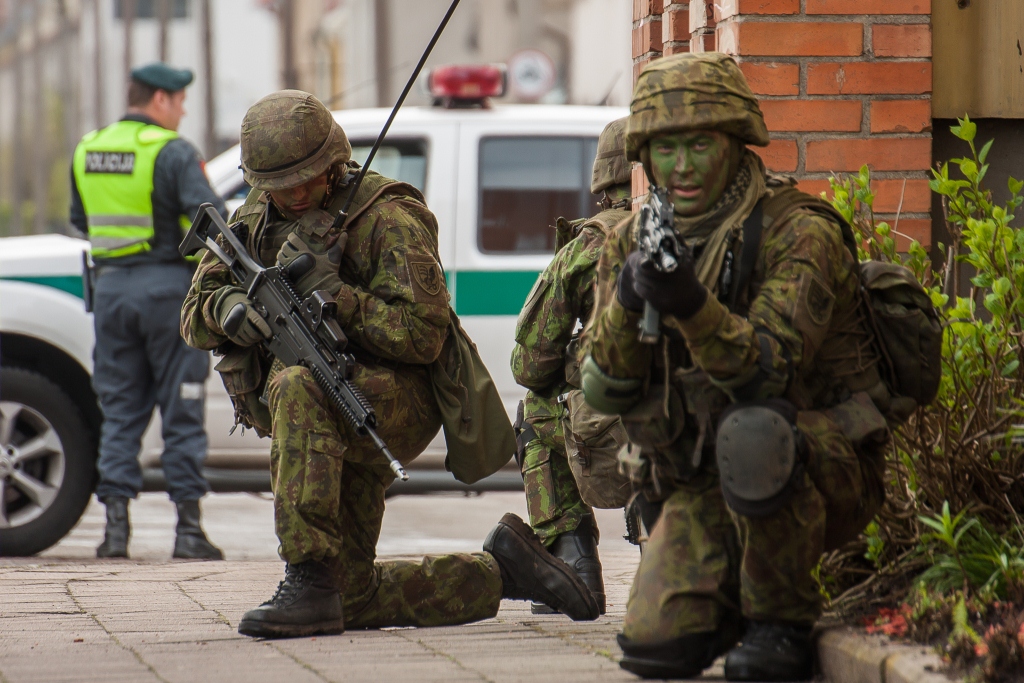
"The main action will take place in Klaipėda: for several days armed soldiers of the Lithuanian Armed Forces will patrol the streets, military vehicles, pyrotechnics and blank ammunition will be used. Although it will change daily life in Klaipėda, I anticipate a positive response from the residents towards the exercise. It will be Lithuanian soldiers training to provide security to the people in Klaipėda in case there is a need to do so," Brigadier General Vilmantas Tamošaitis said.
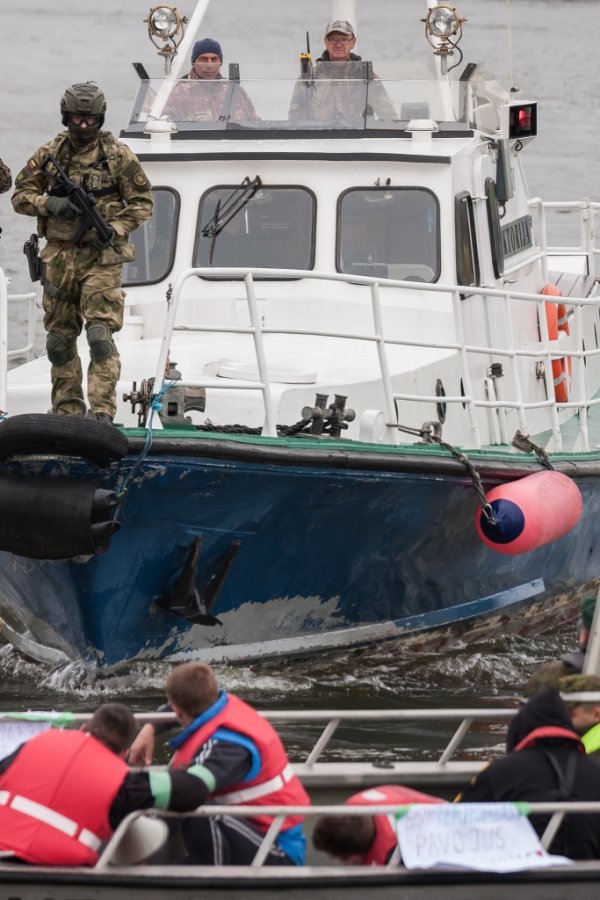
From March 7 to 13 Lithuanian soldiers, officers of the Police Department, Public Security Service and Anti-terrorist Operations Unit Aras, and representatives the State Border Guard Service, and Fire and Rescue Service will train to neutralise sabotage groups together. The raining will also involve representatives from municipalities, medical personnel from city hospitals, and representatives of the Lithuanian Riflemen Union. The action (simulation of different types of incidents) will be concentrated in the industrial part of Klaipėda: streets and port area.
The final phase (March 15-16) of Exercise Lightning Strike will train partial mobilisation of the trained reserve in Alytus, Kaunas Utena, and Vilnius. Draftees will be called up to report to four mobilisation centres in the four cities. This phase of the exercise is linked closely with the concept of the National Rapid Response Force which is to be supplemented with the trained reserve personnel in case of necessity.
Call-up notices have already been sent to 3 thousand draftees so far to report to a designated mobilisation centre to update their personal information and for a health examination. The draftees will have to turn out at stationary mobilisation centres of Alytus, Kaunas and Utena, and at a mobile mobilisation centre in Vilnius installed for the exercise.
"The conscripts are already receiving the call-up notices, a part of them have already contacted military conscription personnel, which essentially means the mobilisation exercise has already begun," Head of the Mobilisation Unit of the Joint Staff Major Dainius Kazlauskas said. According to the officer, the soldiers of the trained reserve who are called up for Exercise Lightning Strike and prove to be in good health are planned to be invited to take part in Exercise Iron Sword the Lithuanian Land Force will organise in autumn.
Exercise Lightning Strike will be held for the second consecutive year to train the National Response Force, practice joint operations with units subordinate to the Ministry of the Interior, improve interaction with civil state institutions, and drill partial mobilisation of the trained reserve.
About National Response Force and Domestic Support Forces
The Domestic Support Forces formed in 2011 stands ready to respond to violations against the sovereignty of the Republic of Lithuania, and to reinforce state border guard, protect vital state or municipal objects or defend them in case of an act of terrorism of mass act of violence, and support state institutions during emergencies in case of necessity. The current composition of the Domestic Support Forces is made of the Lithuanian Grand Duke Butigeidis Dragoon Battalion, territorial units of the National Defence Volunteer Forces and assigned units from the Lithuanian Land Force since 2016.
During peacetime the Lithuanian Armed Forces implements its mission through support to civil institutions in cases of emergency. The task is completed by the Domestic Support Forces trained and used for this purpose. In 2016 the Domestic Support Forces include nearly 1000 soldiers from the Lithuanian Land Force, Navy, Air and Special Operations Forces. The major part of the Domestic Support Forces, roughly 700 personnel, is made up by soldiers of the Lithuanian Grand Duke Butigeidis Dragoon Battalion. It is supported by troops assigned to Juozas Vitkus Engineer and King Mindaugas Hussar Battalions and the National Defence Volunteer Force.
The Domestic Support Forces were formed in 2009 and entered standby in 2010.
The National Rapid Response force is on standby since 1 November 2014. Currently it includes two battalion battle groups formed by the Lithuanian Grand Duke Algirdas Mechanised Infantry Battalion and the Grand Duchess Birutė Uhlan Battalion. The battle groups are reinforced by elements of the Lithuanian Air Force, the Special Operations Forces, and logistic support. Upon receiving an order the force is ready to act within 2 hours.
POC: PAO for the Joint Staff of the Lithuanian Armed Forces Capt. Tomas Pakalniškis, 00370 657 61271
Credits: Giedrius Skiezgilas and Donatas Suchockis