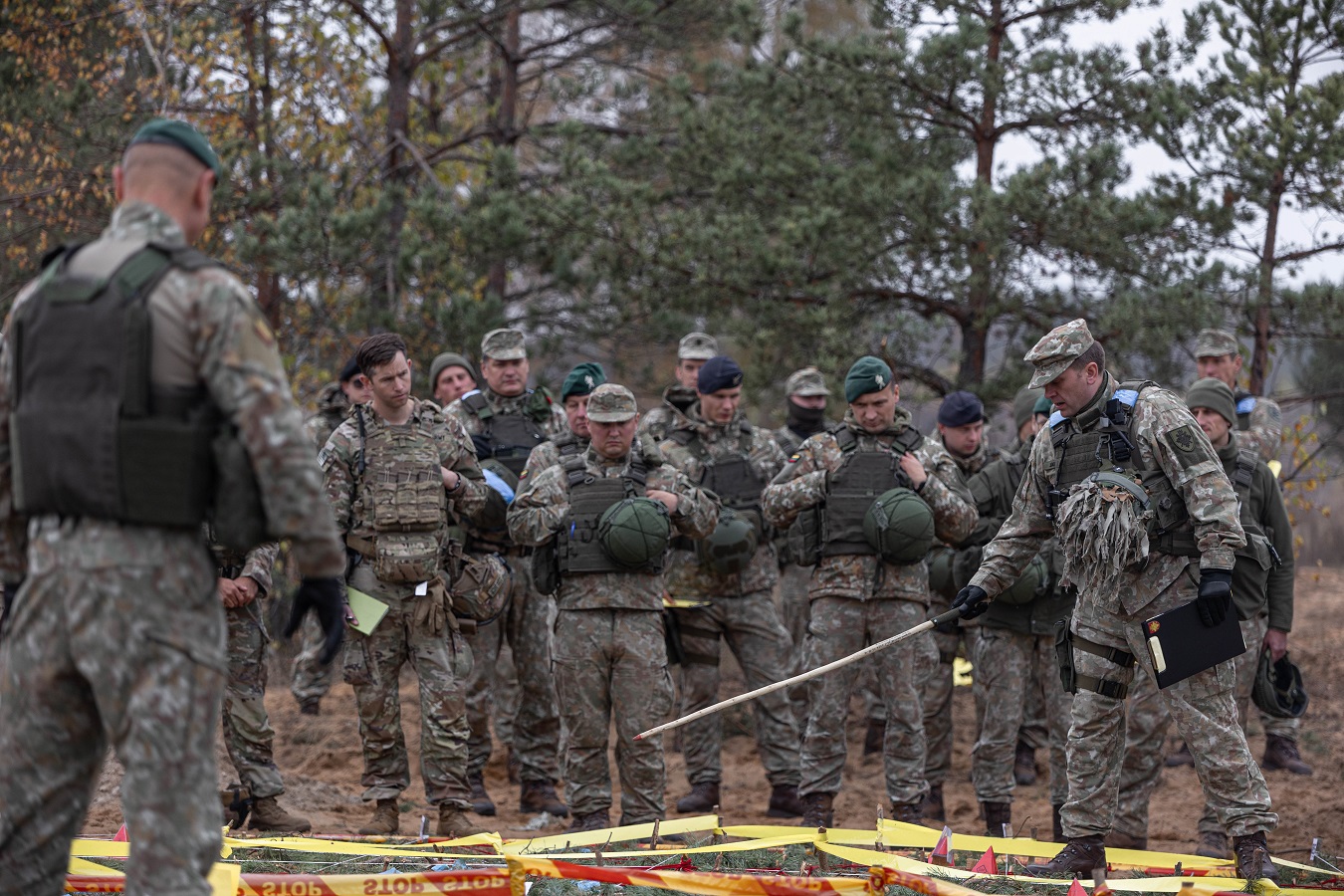
On May 14 the Lithuanian Armed Forces concluded one of the most important parts of the Thunder exercise cycle of this year, Exercise Thunder Fortress 2026. The Joint Armed Forces Command, Lithuanian Armed Forces services’ command posts and command elements of other units were rehearsing military operation planning procedures based on the actual state defence plan. As a result, the Branch Plan was updated, tactical plans drafted, operational concepts were presented to the Lithuanian Armed Forces’ command and coordination of procedures with the NATO Allies refines.
“Besides updating and test-running the state defence plans in the Exercise, we have also evaluated the effectiveness of the ability of different level multinational and Lithuanian Armed Forces unit-level C2 elements to combine into a unified system. It is crucial that the planning processes are supported by actual capabilities, clear sistut8ional awareness and a close collaboration with NATO Allies,” said RADM Giedrius Premeneckas.
The exercise tested procedures and interoperability with NATO Allies: NATO Commands in Brunssum, Naples, Norfolk and the Supreme Allied Headquarters Allied Powers Europe (SHAPE) collaborated with the Lithuanian Armed Forces to synchronise and integrate our armed defence plans in the NATO regional defence plans.
The training focused heavily on updating the concept of command and control elements, effective reserve integration in the defence system, the ability of individual units and service headquarters to conduct operational planning, synchronisation and coordination. The Lithuanian Navy Command and Control Element underwent evaluation of planning procedures. In the meanwhile, a portion of military personnel with the Defence Staff took part in the NATO Exercise Steadfast Deterrence 2026 in Norway which tested cross-coordination and information exchange processes.
One of the key phases of the Exercise, wargaming, tested the Armed Forces’ organisation with the equipment and weapons scheduled to be possessed by 2030. The wargaming specifically verified the efficiency of resource distribution, and identified strengths and weaknesses in plans, capabilities and procedures. The findings will be use to model the autumn scheduled exercise, Thunder Strike 2026, which involve live tactical manoeuvres in different sites across Lithuania.
Thunder Series exercises are held in several phases: in the beginning, headquarters and command post elements plan actions and develop operational documents, and later, combat units rehearse the planned asks in realistic conditions. This sequence ensures consistency of readiness for armed state defence and interoperability with NATO Allies.
Related image. Credit: Lithuanian Armed Force


