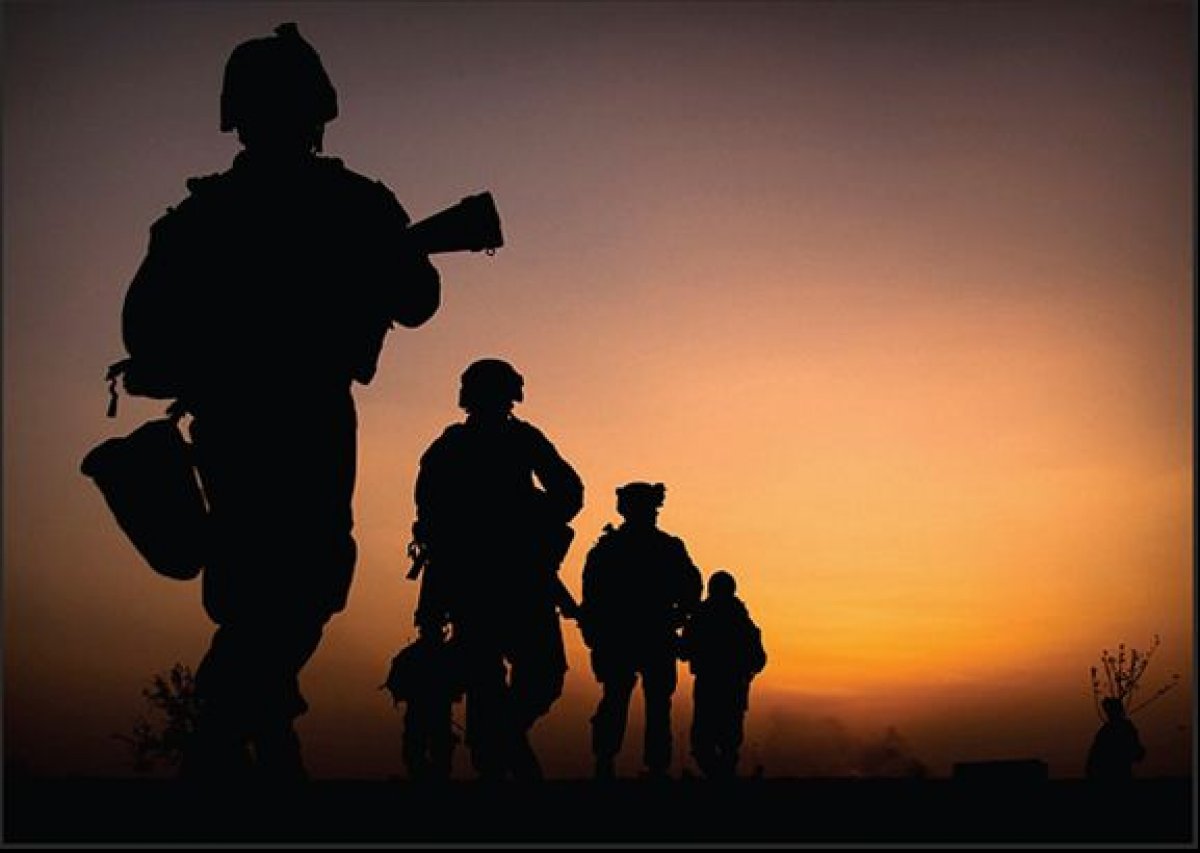
June 11 has become a historical day for Lithuania and the Lithuanian Armed Forces, a part of the most efficient military Alliance in the world, NATO. For the first time in Lithuania a landing operation will take place on the Baltic coast as part of the multinational exercise BALTOPS 2012.
Which troops throughout the world can rise to this important multinational exercise alongside the Lithuanian military, opposing the alleged adversaries consolidated on the coast?
The military authority of the United States of America has entrusted that task to the U.S. Marine Corps Black Sea Rotational Force as a Special Purpose Marine Air-Ground Task Force based in Constanta, Romania. Its key task in BALTOPS 2012 will be sea landing maneuver conducted collectively with the units of the Lithuanian Armed Forces. Expeditionary forces will be transported to the Lithuanian shore by our strategic partner, Poland, via their Lublin-class ships.
Task Force 62, formed by the Special Purpose U.S. Marine Expeditionary Unit (MEU), from 6th Fleet of the U.S. Navy, commands the American troops landing on the coast here. The Force comprises approximately 1900 members and is supported by tanks, artillery, and transport helicopters, just like any of the U.S. Marine Expeditionary Units. It can be task tailored for maritime and ground operations, amphibious landings, and humanitarian efforts such as the rescue or evacuation of civilians from international areas in crisis.
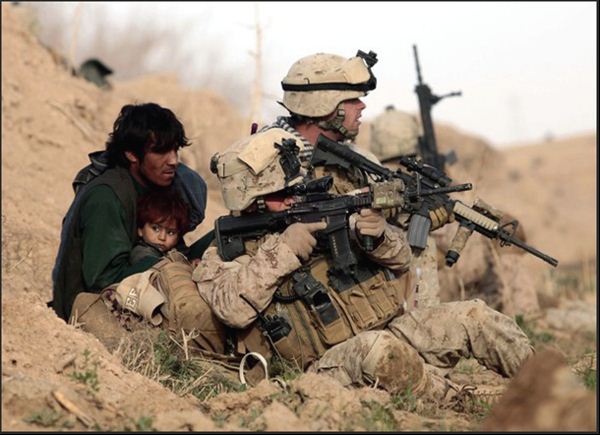
Throughout America, it is understood both by the Marine Corps and citizens that Marines stand ready to respond to any call from their nation, America's "Force-in-Readiness." During the past decade confidence in the U.S. Marine Corps was deepened by their performance in Iraq and Afghanistan, and a variety of humanitarian and rescue operations in the regions of Asia and Africa. U.S. Marines also rendered support to NATO-led operations in Kosovo.
Marines are capable of performing a full spectrum of tasks, and two of these are essential. The first one is to ensure access to the coastal area through integration of maritime and land actions by employing all the military or tour-de-force means available. At strategic level, theyassist authorities in facing diplomatic, geographic and military challenges when solving strategic tasks in the areas of conflict pre-emption, defending national interests or assistance to partners, including Lithuania. Therefore in cases of such need the U.S. Marine Corps is the first to encounter the adversary in any region of combat action.
The second key task is responding to crises situations that could escalate into combat action or a small-scale war. Responding to a crisis promptly, rendering humanitarian assistance or waging short-term combat actions requires such characteristics as versatility, flexibility and all-purpose skills. There are many unknowns such as what mission will be next to prepare and train for, when the next operation will be launched or where. This is the daily routine of this unique force capable of deploying in any part of the world, conducting any type of operation and in possession of a huge arsenal and experience of tactical actions. During the past two decades the U.S. Marines proved their scope and determination in more than 100 military and rescue operations. Through the BALTOPS 2012 scenario of the amphibious landing operation, including preparation and follow-on action, both Marines and Lithuanian forces will collaborate, enhancing teamwork and both militaries' skills and abilities. The operation, supported by the Marines, will involve military personnel from the Lithuanian Special Operations Forces, Reconnaissance Company of the Mechanized Infantry Brigade "Iron Wolf", and Lithuanian Grand Duke Algirdas Mechanized Infantry Battalion, as well as USS Normandy, two U.S. B-52 strategic bombers, two PA-200 "Tornado" fighter-jets of the German Air Force, two Mi-8 helicopters of the Lithuanian Air Force, joint Estonian, Latvian and Lithuanian mine clearance squadron BALRON, and the Explosive Ordnance Disposal and Diving Group of the Royal Netherlands Navy, and Polish naval assets.
Bearing in mind the resolve and the wish of all the partners to equal the best, the training solution has been found: the U.S. Marines and allies training together.
Additional information
The expeditionary unit is the smallest Marine Air-Ground Task Force of the U.S. Marine Corps tailored to respond immediately to any sort of crisis in the region. This unit typically is comprised of four elements:
- Ground Combat Element, like an enforced infantry battalion, includes an infantry battalion, an enforced artillery battery, an amphibian assault platoon, an engineer platoon, light armoured reconnaissance company, a tank platoon, a reconnaissance platoon, and other units necessary to complete a task (approximately 1100 troops);
Air Combat Element-including a heavy helicopter squadron enforced by other (transport, assault or all-purpose) helicopters and ship-launched fighter-jets,and other air assets;
- Logistic Combat Element - battalion-sized unit which ensures sustention of the MEU in any conditions for the period of at least 30 days;
- Command and Staff which ensures planning, coordination, command and control of reconnaissance, surveillance, fire precisioin and power, , specialized communications systems, electronic warfare, and other capabilities vital for completion of tasks.