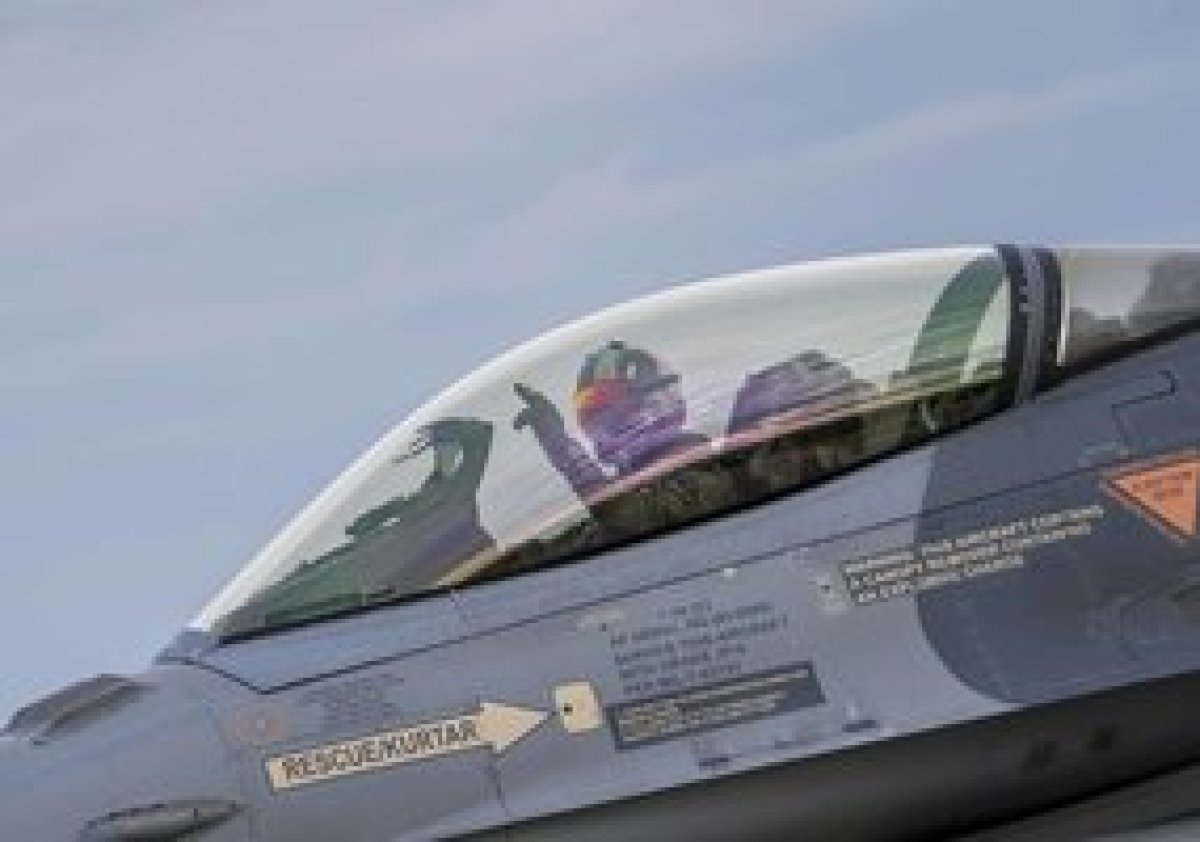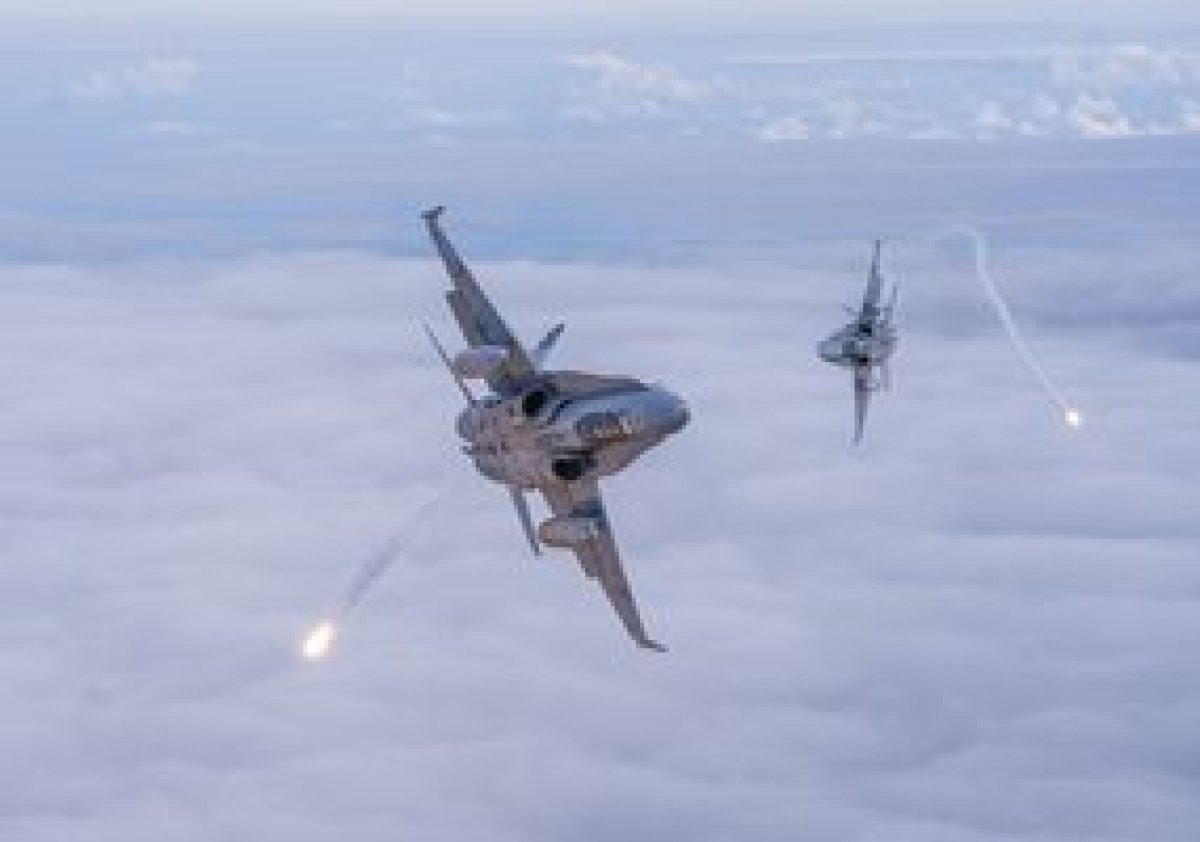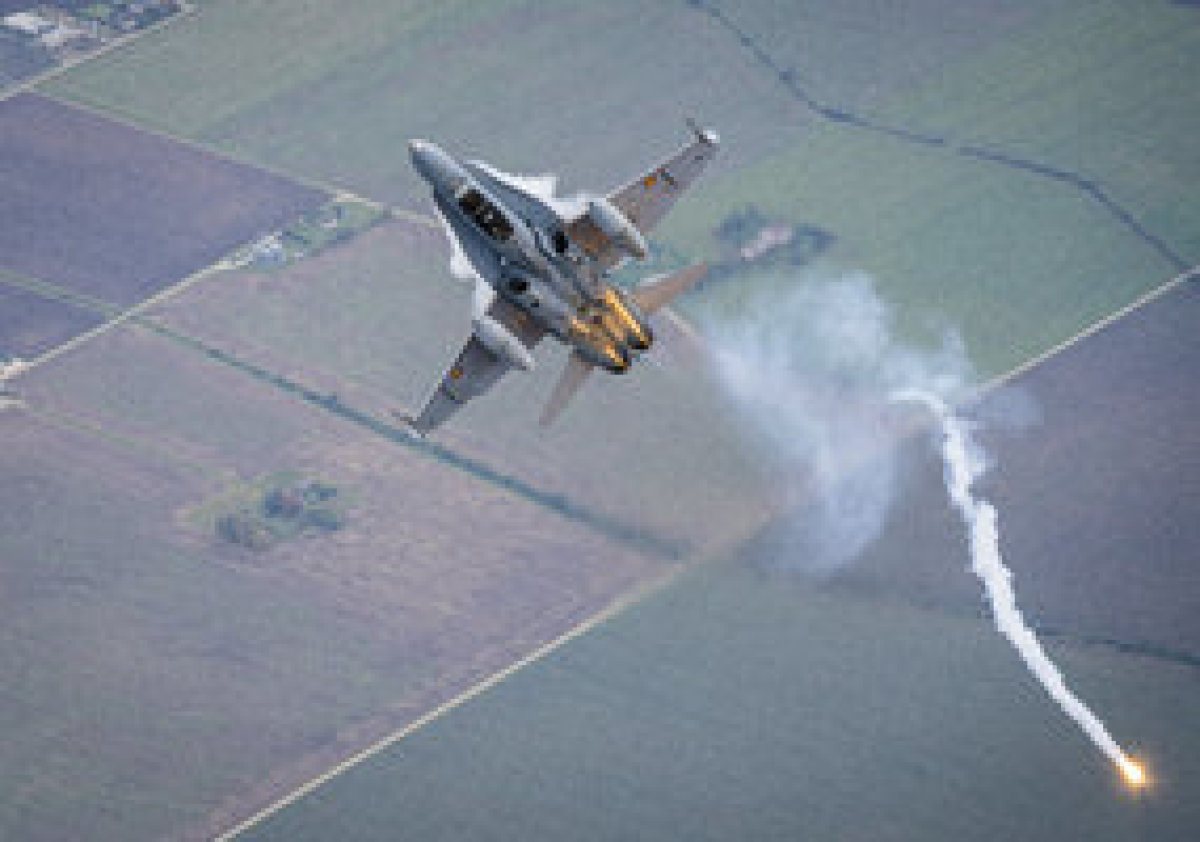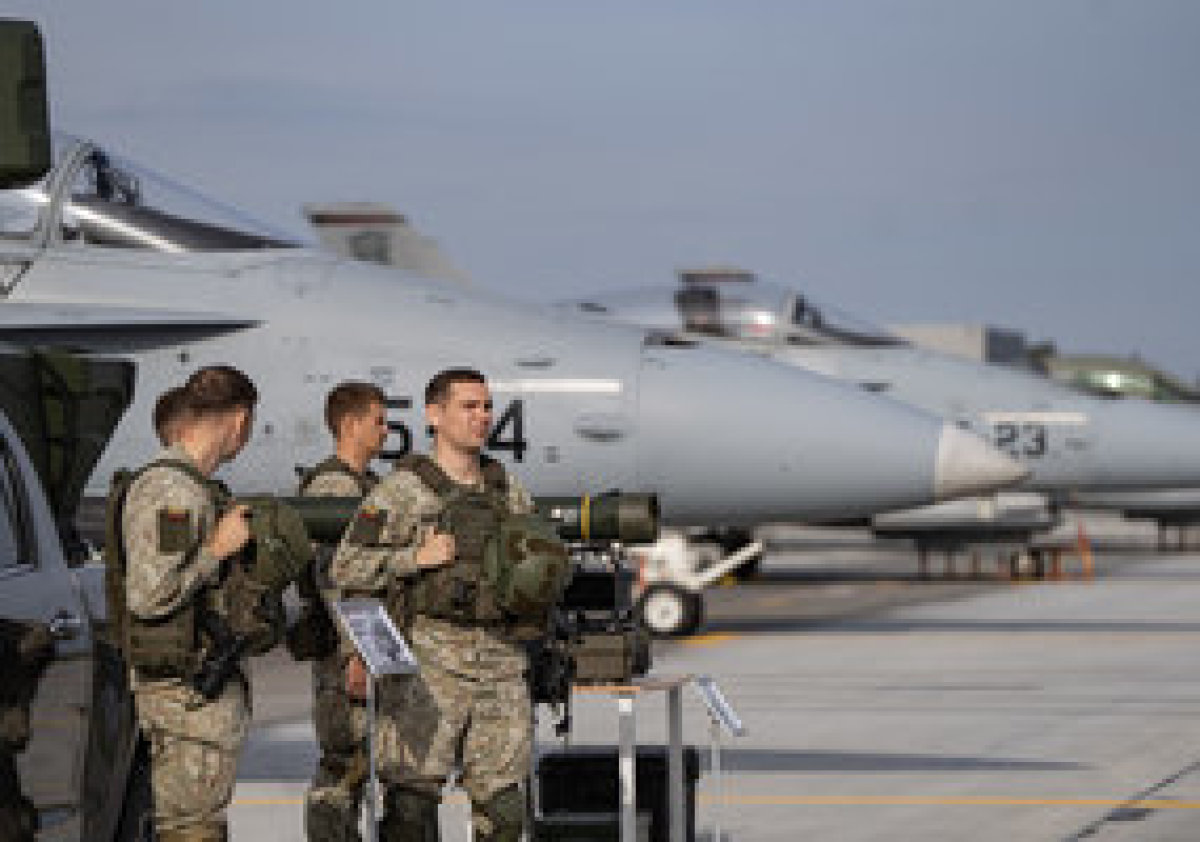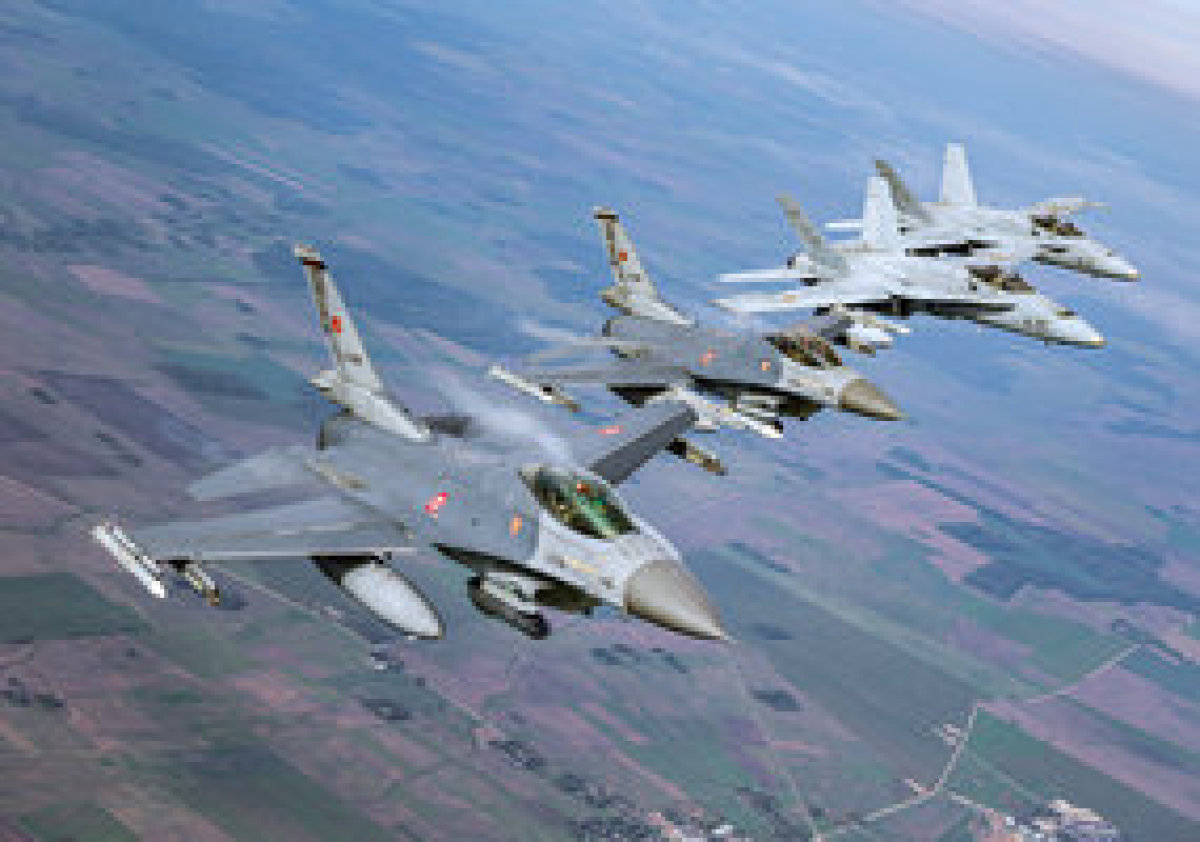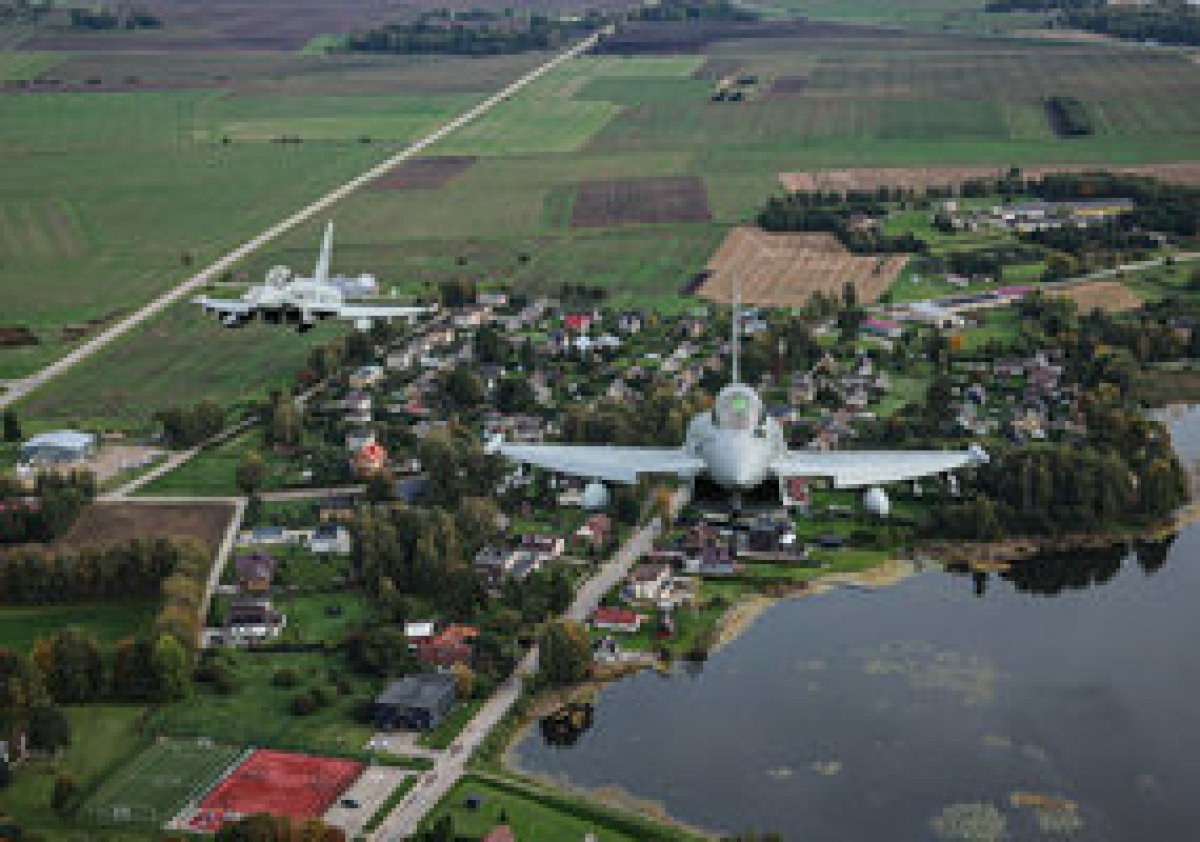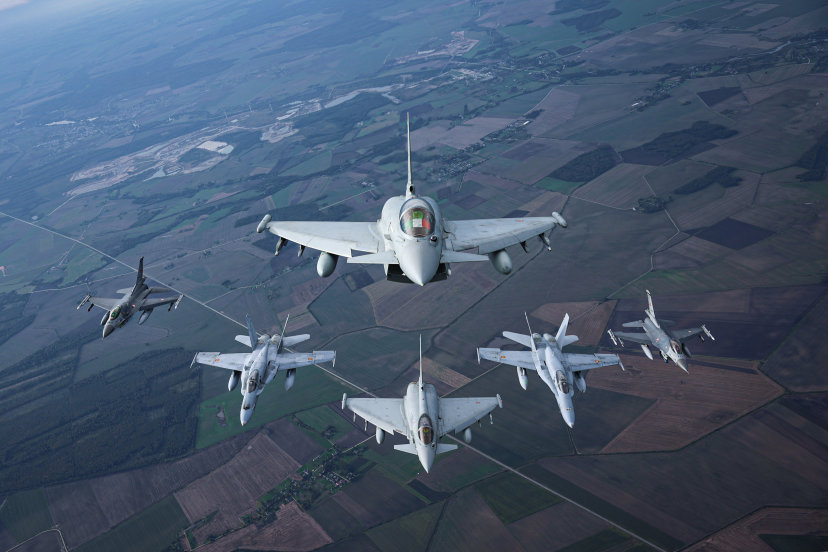
On September 30, a press conference held at the Lithuanian Air Force Base in Šiauliai represented the evolving nature of NATO air defence highlighting the transition from the routine air policing model to a wider air defence system designed to deter and, if needed, defend against different air and missile threats. The decision to progress from Baltic air policing to air defence was taken at the NATO Summit in July, with the new mode taking effect in August.
“I would call air capabilities the first line of defence. I am certain that with air capabilities and, particularly, the Allied Air Command, we can deter any threat. We exhibit a very high level of readiness and training making us fit to maintain air supremacy against any threat,” said Lieutenant General Guillaume Thomas Deputy Commander of NATO's Allied Air Command in Ramstein, Germany.
The Lithuanian Armed Forces is consistently strengthening national airspace surveillance and defence capabilities with a particular focus on detection of small and low-flying objects and rapid response to air threats. The review of the integrated airspace defence concept, implemented by testing and integrating new technologies in the overall system, was prompted by the war in Ukraine.
“There are different types of unmanned aerial vehicles breaching into our airspace, missile threat also remains. Taking that into account, NATO has taken the decision to expand the mission profile accelerating the decision-making process, enhancing coordination between the Host Nation and the Allied Air Command responsible for decision-making. The Rules of Engagement have been reviewed to reflect the situation on the ground. Multiple measures have been introduced and evident over the past months,” Rear Admiral Giedrius Premeneckas said highlighting the core changes in the mission profile.
Strengthening airspace surveillance comes as the next step: long and short-range radars are being set up, acquisition of additional and passive radars is in the plans. In the meantime, tests of acoustic radars are run and a system is constructed to integrate together military, public institutions’ and civilian sensors to establish a recognised air picture.
Air defence capabilities are consistently strengthened: the first NASAMS Battery is nearing Initial Operational Capability, purchase of the third NASAMS Battery and two MSHORAD Batteries is in progress. Meanwhile, Lithuania’s stockpiles of air defence ammunition are also expanded, and formation of a UAV training capability has been underway in the Lithuanian Armed Forces since 2024, already preparing operators for force protection from the air, long-range reconnaissance flights, enemy detection, target identification and supporting fire units with data. Moreover, the Autonomous Long-range UAV Unit was established and has been testing unmanned system, counter-drone capability and drone interception technology with Lithuanian and foreign industry manufacturers since. Lithuania has also approved the Air Defence Regiment Development Plan concerning equipment introduction and scaling up air defence units.
Lithuania strengthens communications and C2 capability by expanding the secure tactical data network, installing mobile communications and C2 solutions, enhancing procedures of airspace restriction and interaction with the Air Navigation.
Host Nation Support capabilities are expanded at the Šiauliai Air Base where the NATO AWACS, strategic transport and other types of Allied aircraft are already hosted. Concurrently, the Lithuanian Armed Forces is upgrading its air capabilities by transitioning from Mi-8 to UH-60M Black Hawk.
The core target of the transition kicked off in August is to provide an integrated air defence system with minimal minimal time and maximum efficiency between target detection and neutralization.
Photo credits: Lt Margarita Klimienė and SSgt Arnas Čemerka